


When people start looking for land, it is rarely just about the money. It’s about space, peace, security, and a sense of doing something meaningful with their savings. At SBC Earthfulness, we meet many people who want land that feels alive.
One of the first questions that always comes up is the difference between raw farmland vs developed farmland. And before you choose between different farmland investment options, it is important to clearly understand what is raw farmland and what is developed farmland.
Let us walk you through all you need to know about the two options!
Table of Contents
ToggleWhat Is Raw Farmland?
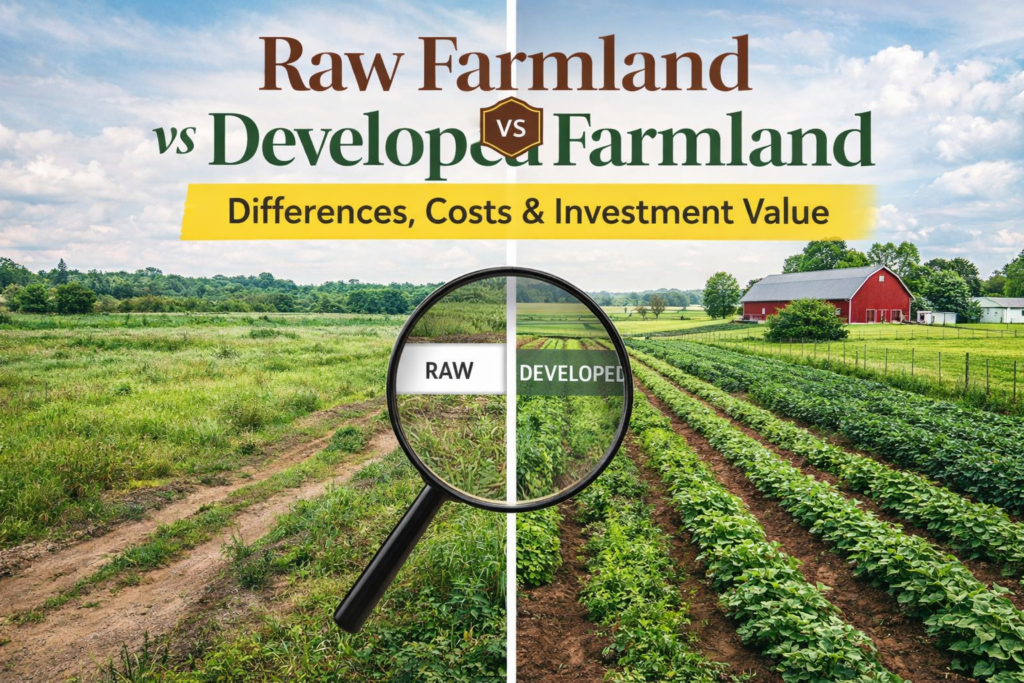
First let’s understand what is raw farmland. As the name suggests, it is basically a land in its natural state. It does not have any roads, no fencing, no borewell, and no electricity connection. No landscaping. It is land as it exists on its own — soil, slope, plants, and whatever nature has placed there over time.
So when someone buys a raw farmland, they are not buying convenience. What they are buying is potential and trust in the land to grow.
Pros of Raw Farmland:
- You get freedom to do whatever you want with that piece of land. You are not forced into someone else’s layout or design. You decide where the trees go, where the paths go, and how the land will be used.
- The price is another big pro, as it usually costs less upfront than land that already has its infrastructure. This is also what makes it very attractive as a farmland investment option for people thinking long-term!
- There is also something very emotional about the raw land, as you literally watch it change slowly. Planting trees, seeing water settle, and improving soil actually gives you a sense of ownership.
Cons of Raw Farmland:
- It needs a lot of work. So you will have to create access paths, install water systems, or improve soil quality before it becomes usable.
- That being said, building all of that takes time and money.
- There are also legal checks involved, like zoning rules, water availability, and land records, which must be verified carefully!
- Lastly, raw farmland is powerful, but only when chosen wisely.
What Is Developed Farmland?
Now, let’s talk about the other side: what is developed farmland?
Developed farmland is land that already has basic infrastructure in place. Unlike the raw farmland, this may include internal roads, fencing, water sources, irrigation systems, and sometimes electricity access. So here, the land has been prepared so that it can be used almost immediately.
Its a farmland that is ready to function whenever you wish to. At SBC Earthfulness, when we develop land, we do it in a way that protects soil, water movement, and native plant life.
Pros of Developed Farmland
- One of the biggest advantages is the speed at which you have to wait. Here, you do not have to wait years before using the land!
- Then comes predictability. You already know how water flows, how the soil behaves, and how access works. In fact, if you compare farmland investment options, this feels far safer!
- Resale value is also easier to manage! And since infrastructure already exists, developed farmland will get you more buyers if you decide to sell later.
Cons of Developed Farmland
- The downside can be the upfront cost, which in turn brings you the convenience.
- Some people say that there is less flexibility than raw farmlands, as you are basically stepping into a system someone has planned.
- You should go with trusted developers, as poor development can make or break it all!
Raw Farmland vs Developed Farmland
Now let’s compare raw farmland vs developed farmland so you can make a decision based on what suits you:
| Feature | Raw Farmland | Developed Farmland |
| Initial cost | Lower | Higher |
| Infrastructure | None | Already present |
| Time to use | Long | Short |
| Design control | Full | Limited |
| Risk level | Higher | Lower |
Here is a financial comparison as well:
| Factor | Raw Farmland | Developed Farmland |
| Entry price | Affordable | Premium |
| Setup cost | High later | Already included |
| Return timeline | Long-term | Medium-term |
| Appreciation | Strong over time | Steady |
Why This Comparison Matters for Investors
Let’s be honest, land is not like sticks. It does not change overnight. But rather, the value of a land grows through care, time, and planning. This is where understanding raw farmland vs developed farmland can help you avoid a lot of confusion.
Generally, people who choose raw farmland often want to shape something from the beginning. They like slow growth and long-term appreciation. On the other hand, people going for developed farmland usually want to shift immediately or do not want uncertainty!
At SBC Earthfulness, we see land ownership as a partnership with nature. Whether someone wants to understand what is raw farmland or explore what is developed farmland, we help them look beyond just the price and into the future of the land itself.
How to Choose Between Raw and Developed Farmland
Here is how you can make a wise decision:
-
Know your purpose
You should ask yourself the purpose behind your investment in a land. Are you buying to hold? To farm? To build? Knowing the purpose will make the decision easier between raw farmland vs developed farmland.
-
Check your time horizon.
If you want to use the land within months of buying, then developed land makes much more sense. But if you think you can wait and build gradually, then raw farmland will bring you much more control.
-
Think about sustainability
Soil health, water movement, and tree cover matter more than fencing and roads. So whether you are learning what is raw farmland, or choosing a developed land, it must have plans for its sustainability.
-
Budget for the whole journey
Lastly, the price you pay for the land is just the base price you are starting with. As time passes, you will also need to spend on development, maintenance, and legal work.
| Buyer Type | Better Choice |
| Long-term planner | Raw farmland |
| Immediate user | Developed farmland |
| Nature-focused buyer | Raw farmland |
| Low-risk buyer | Developed farmland |
Final Thoughts
At SBC Earthfulness, we don’t treat land like a product. We treat it like a responsibility. And here is our advice: The choice between raw farmland vs developed farmland is not about right or wrong. It is about alignment.
Among all the farmland investment options, a land that respects nature and protects its ecosystem holds the strongest future.
Frequently Asked Questions
1.What do you mean by raw land?
Raw land is land without any infrastructure. Basically its land that you can decide what to do with, and give it a structure, design, and prepare it for active use.
2.What are the 4 types of land use?
Residential, agricultural, commercial, and industrial are the most common uses of land.
3.Does developed farmland give faster returns?
Yes. Because it is already usable, developed farmland can generate returns sooner. This is why many people exploring farmland investment options prefer it for medium-term goals.
4.What are the main risks of buying raw farmland?
Development costs, legal restrictions, and time. But with proper planning, raw farmland can be one of the most rewarding farmland investment options for long-term buyers.