

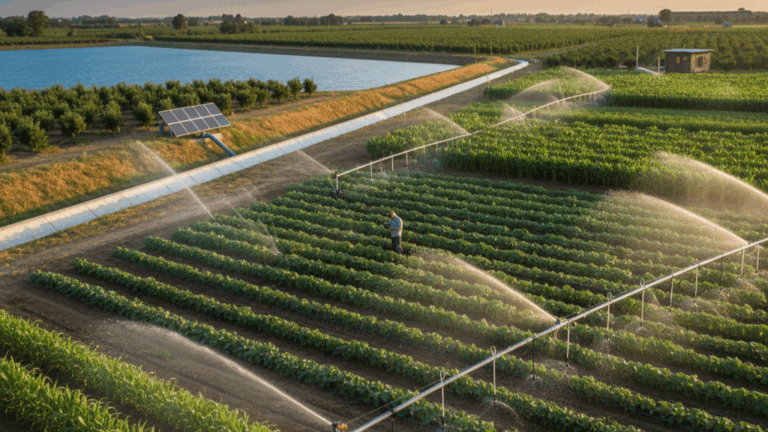

Water scarcity is one of the most pressing challenges facing Indian agriculture today. According to the National Institution for Transforming India (NITI Aayog), India uses nearly 80% of its total freshwater for agriculture — yet up to 60% of that water is lost to inefficient irrigation methods like flood and furrow irrigation.
For managed farmlands in regions like Denkanikottai, Tamil Nadu, Where rainfall is seasonal and groundwater levels are under pressure — getting water management right is not optional. It directly determines crop health, land productivity, and long-term returns for farmland investors.
At SBC Earthfulness, water management is built into the foundation of how the farmland is maintained. This article explains exactly how it works, why it matters, and what makes the approach here different from conventional farming.
So let’s begin!
Table of Contents
ToggleWhat Is Water Management in Agriculture?
Water management in agriculture refers to the complete system of planning, delivering, storing, and monitoring water across a farmland ensuring crops receive the right amount at the right time with minimum waste.
It covers three key layers:
- Irrigation water management : how water is delivered to crops (drip, sprinkler, flood)
- Water storage management : ponds, tanks, and rainwater harvesting systems
- Soil moisture management : monitoring water retention based on soil type and crop demand
At managed farm Land near denkanikottai, the local soil is primarily red laterite soil well-draining but low in water retention. This makes a precision irrigation approach essential, since over-watering leads to rapid runoff and under-watering causes rapid moisture loss. A one-size-fits-all approach simply doesn’t work here.
Top Benefits of Drip Irrigation for Managed Farmland
1. Water Savings of Up to 50%
Studies by the Indian Council of Agricultural Research (ICAR) show that drip irrigation reduces water usage by 40–50% compared to conventional flood irrigation, while maintaining or improving yields. For a region like Denkanikottai where groundwater recharge is seasonal, this is critical for long-term sustainability.
2. Higher Crop Yield and Quality
Consistent moisture delivery means plants experience fewer stress cycles. Research shows drip-irrigated crops can yield 20–50% more than conventionally irrigated ones, depending on the crop type. At SBC Earthfulness, this directly supports the productivity of the managed farmland portfolio.
3. Lower Energy and Operating Costs
Drip systems operate at low pressure, consuming significantly less pumping energy than high-pressure sprinkler systems. Over a full growing season, this translates to measurable reductions in electricity and diesel costs.
4. Weed and Disease Control
Since water is delivered only to the root zone, the surrounding soil stays dry. This reduces weed germination between rows and lowers the risk of fungal diseases caused by excess surface moisture both common problems in Tamil Nadu’s humid monsoon months.
5. Soil Health Preservation
Flood irrigation compacts soil over time, reducing aeration and microbial activity. Drip irrigation avoids this, maintaining the soil structure that supports long-term farmland productivity.
Also Read : Why More Families Are Choosing Managed Farmlands Over Flats
Water Storage: The Role of Farm Ponds at Denkanikottai
Beyond drip lines, water storage infrastructure is a core part of effective farm water management. Farm ponds and storage tanks serve two functions:
- Rainwater harvesting : capturing seasonal rainfall (Denkanikottai receives approximately 900–1000mm annually, primarily during the northeast monsoon) for use during dry periods
- Buffer supply : ensuring irrigation can continue even if borewell or canal supply is interrupted
At SBC Earthfulness, integrated pond systems are part of the farmland design, contributing to both water security and ecosystem health on the property.
Challenges To Watch Out For
Managed farmland water systems are robust, but there are real challenges investors and managers should understand:
Initial setup cost : Drip systems, pumps, storage ponds, and sensors require upfront investment. However, this is a one-time infrastructure cost that pays back through reduced operating costs and improved yields over time.
Water quality : If source water contains high silt or mineral content, drip emitters can clog over time. Regular flushing and filter maintenance are essential.
System monitoring : Sensors, timers, and flow meters need periodic calibration to ensure the system performs as designed.
Why This Matters for Managed Farmland Investors
If you’re considering managed farmland as an investment near Denkanikottai or Hosur, water management infrastructure is one of the first things to evaluate. A farmland without a reliable, efficient irrigation system is exposed to yield variability and long-term soil degradation — both of which affect returns.
SBC Earthfulness is designed with this in mind. The combination of drip irrigation, farm pond storage, and soil-matched water scheduling means the land is productive across seasons, not just during peak monsoon periods.
Interested in owning managed farmland near Denkanikottai with professional water management built in?
Frequently Asked Questions
1. Why is water management important for managed farmland?
Effective water management improves crop health, conserves water, protects soil quality, and helps maintain consistent agricultural productivity, making it essential for long-term managed farmland investments.
2. How does drip irrigation benefit farmland in Denkanikottai?
Drip irrigation delivers water directly to plant roots, reducing water use by up to 50%, improving crop yields, lowering weed growth, and preserving soil health in Denkanikottai’s red laterite soils.
3. What role do farm ponds play in water management?
Farm ponds store seasonal rainwater, provide a reliable irrigation backup during dry periods, and support sustainable water availability throughout the year.
4. What should investors check before buying managed farmland?
Investors should evaluate the irrigation system, water source, storage infrastructure, soil type, and long-term water management practices to ensure sustainable farmland productivity.
5. How does SBC Earthfulness manage water efficiently?
SBC Earthfulness integrates drip irrigation, farm ponds, rainwater harvesting, and soil-based irrigation scheduling to improve water efficiency and support productive managed farmland near Denkanikottai.