

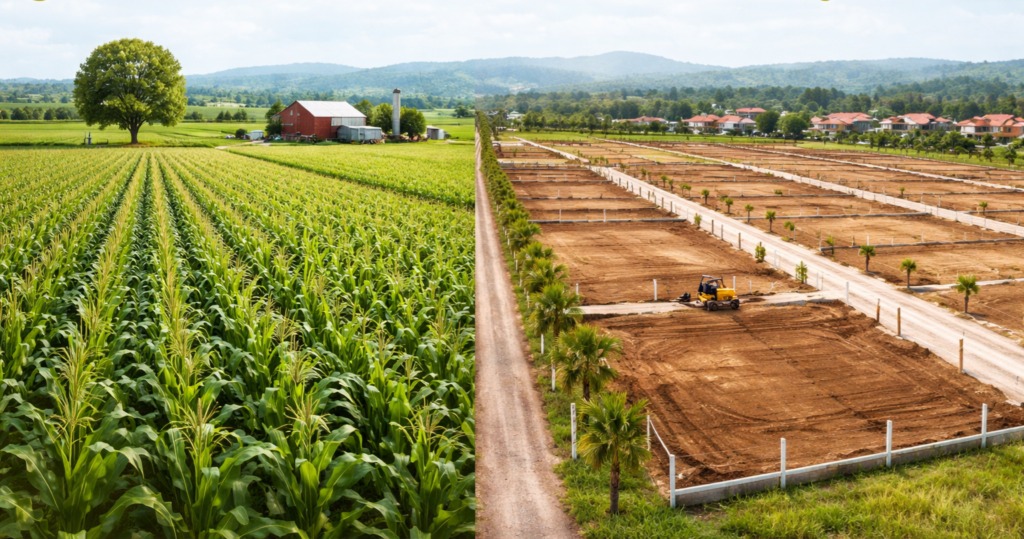

A lot of people start exploring land ownership with a simple thought: maybe I should buy farmland someday. But within the few minutes of research, things get confusing. Agriculture land vs farming land start appearing everywhere, and suddenly it’s not clear what they actually mean.
So, is farmland the same as agricultural land? Is one better for investment than the other? And what exactly is the difference between agriculture and farming land?
In this guide, we will answer all your questions and actually give you the clarity you need on what agricultural land is, what farmland is, and how modern farmlands work.
What Is Agricultural Land?
Firstly, we will talk about what agricultural land is. In simple terms, agricultural land refers to land that is legally designated for farming activities. Now, this can include growing crops, cultivating plantations, raising livestock, or running orchards.
Typically, agricultural land is:
- Raw or minimally developed
- Located in rural areas
- Used for farming or cultivation
- Managed directly by the owner or farmers
In most of the cases, buying agricultural land basically means you are buying the land itself, so everything else on it also becomes your responsibility.
Here are some uses of agricultural land:
| Type of Use | What It Involves |
| Crop cultivation | Growing grains, vegetables, or pulses |
| Plantation farming | Coconut, coffee, mango, or fruit plantations |
| Livestock grazing | Land used for cattle or dairy farming |
| Orchards | Cultivating fruit trees |
Now, for someone living in a city, managing the land can be very complicated. And this is why it is very important to have the conversation around agricultural land vs farming land, so you can know what owning raw land really feels like.
What Is Farmland?
Now, let’s look at the other side of the equation: what is farmland?
We get the confusion because, traditionally, farmland also means land use for agriculture. But today, especially near the growing cities, the meaning has expanded. In fact, in many cases, farmland refers to planned farm plot communities or managed farmland projects.
So when people ask what is farmland, they’re often talking about farmland that has been developed into smaller plots with infrastructure already in place.
This means, you get:
- Internal roads
- Water management systems
- Plantation support
- Security or maintenance services
- Community spaces
Here is how farmland projects usually work:
| Feature | What Buyers Get |
| Planned plots | Easier ownership compared to large agricultural parcels |
| Infrastructure | Roads, irrigation, and basic utilities |
| Farm management | Assistance with cultivation and maintenance |
| Community spaces | Shared nature areas and outdoor experiences |
And there is no doubt that this approach of managed farmland has actually made farmland approachable for people. After all, instead of managing everything alone, you can actually enjoy farmland for the feels and lifestyle!
Agriculture Land vs Farming Land: Key Differences
| Factor | Agricultural Land | Farmland Projects |
| What it basically means | Agricultural land is land that is officially meant for farming activities like growing crops, plantations, or raising livestock. | Farmland projects are planned developments where agricultural land is divided into smaller farm plots that people can buy and use. |
| Ownership experience | When you buy agricultural land, you’re mostly on your own. You own the land and handle everything that comes with it. | In farmland projects, you still own your plot, but there is usually some structure around it, like shared infrastructure or farm management support. |
| Infrastructure | Agricultural land is usually raw. Things like access roads, irrigation, fencing, or electricity may not already exist. | Farmland projects are typically developed with basic infrastructure such as internal roads, water systems, and clearly marked plots. |
| Size of the land | Agricultural land is often sold in larger parcels, which can be difficult for an individual buyer to manage alone. | Farm plots in farmland projects are usually smaller and easier to maintain, especially for people who live in cities. |
| Who manages the farming | The owner is responsible for everything from preparing the soil to maintaining crops or hiring farm labor. | Some farmland projects provide support for planting, maintenance, or general farm care, depending on the setup. |
| Location | Agricultural land is usually located in rural areas and may be quite far from major cities. | Many farmland projects are developed closer to cities so owners can visit easily on weekends. |
| Lifestyle element | Agricultural land is mainly focused on farming and agricultural production. | Farmland projects often combine farming with lifestyle experiences like nature stays, outdoor activities, and community spaces. |
| Suitability for city buyers | It can be challenging for urban buyers because managing land remotely requires time and agricultural knowledge. | Farmland projects are often designed keeping urban buyers in mind, making land ownership more accessible. |
| Investment angle | The value of agricultural land usually depends on farming potential and location. | Farmland projects may also gain value due to infrastructure, development, and increasing interest in nature-focused living. |
A simple way to understand the agriculture land vs farming land is to understand the difference in how involved you actually need to be. While with agricultural land, you are basically running everything by yourself. With managed farmlands, SBC Earthfulness can manage them for you!
This is why many buyers today first try to understand the difference between agriculture and farming land before deciding which type of land fits their lifestyle or investment plans.
What Does This Mean For Buyers?
If you live in a city and are thinking about owning land, this is probably the most relevant question you can ask! Like, for someone with agricultural experience, traditional land ownership can still be a good fit. But for many, exploring agriculture land vs farming land, the lifestyle they want is different.
They are often looking for:
- A quiet place to visit on weekends
- A connection to nature
- A long-term land investment
- A slower pace of life away from the city
This is exactly why managed farmland communities have become very popular in recent years.
Final Thoughts
At SBC Earthfulness, this is exactly what we try to keep in mind while planning our farmland projects. We believe that you owning land should feel rewarding and peaceful, rather than feeling like another responsibility added to your already busy life. So, our idea has always been very simple: create spaces where people can stay connected to the land, enjoy nature, and still feel that the experience is manageable.
Now that you understand the difference between agriculture and farming land, we hope you can make a decision more clearly.
Frequently Asked Questions
1. Is it good to invest in farmland?
Absolutely yes! Farmlands can be a long-term investment. So when you are comparing agriculture land vs farming land, you should look at the location, infrastructure, and how much involvement you want in managing the land.
2. What is the most common type of land use?
Agriculture is one of the most common ways land is used around the world. This includes crop cultivation, livestock, and plantations.
3. Which Option Is Better for Urban Buyers?
For many people living in cities, farmland projects are often easier to manage than traditional land ownership. Once you understand the difference between agriculture and farming land, it becomes much easier to decide what suits your lifestyle.
4. Why Farmland Projects Are Growing Near Cities
It is because now more people want to be close to nature, and are experiencing a shift in lifestyle.