

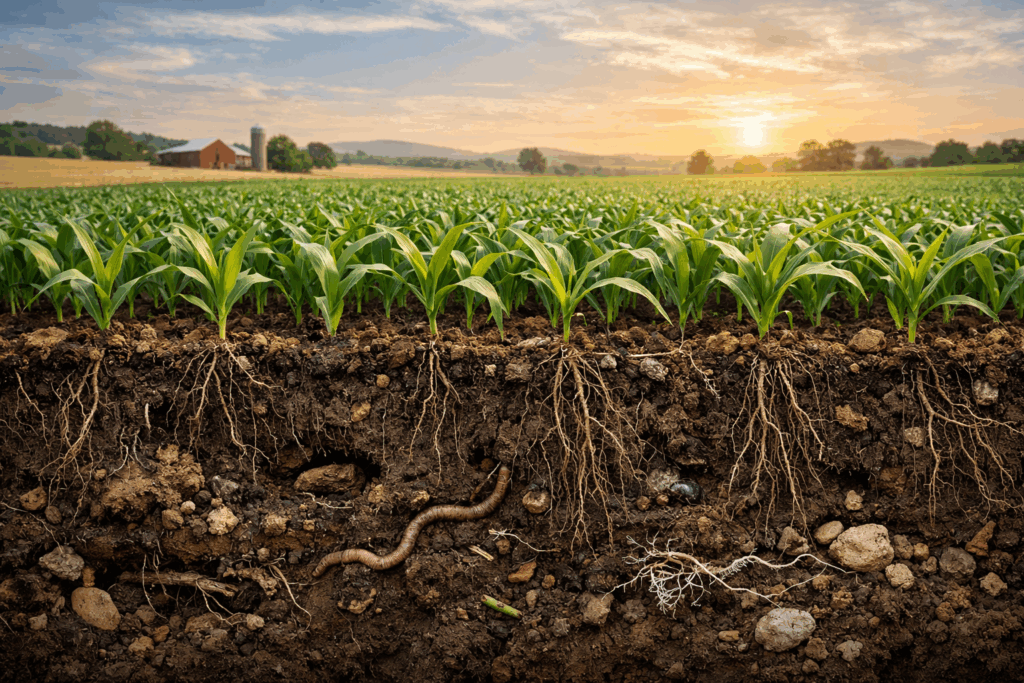

When people talk about farmland investment, most conversations stop at location, water access, and price per acre. But there’s one thing that quietly decides whether that land will grow in value or slowly lose its potential, and that is the soil. The soil is not just dirt under your feet; instead, it’s a living system. And why is soil health important becomes very clear the moment you look at farmland as a long-term asset, and not a short-term trade.
Only with a healthy soil can you get consistent yields, reduce farming risks, and make sure that you get farmland investment results over time. At SBC Earthfulness, we take soil very seriously and take care of everything, including the trees, crops, water retention, biodiversity, etc.
In this article, we will break down what is the importance of soil, how it impacts long-term farmland investments, and why improving soil usage is no longer optional for investors!
What Is Soil Health and Its Functions
Before you get into investments and returns, let’s talk about soil and what a healthy soil even means!
When we talk about soil health, it refers to the soil’s ability to function as a living ecosystem. A healthy soil supports plant growth, holds water efficiently, cycles nutrients naturally, and sustains microorganisms that will keep your hand productive year after year.
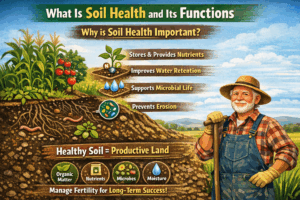
This is where people often ask, “What is the importance of soil,” really? The answer is pretty simple: spil does everything for your land, and performs functions such as:
- It stores and supplies nutrients to plants through proper soil nutrient management.
- It improves water retention and reduces erosion.
- It supports microbial life that naturally regenerates nutrients.
- It creates stable conditions for long-term cultivation.
This is exactly why soil health is important. Once soil structure breaks down, productivity drops, costs will rise, and well, your farmland will lose its long-term appeal. And if you don’t want this, then soil fertility management is what you have to do! After all its all about maintaining the balance of organic matter, nutrients, microbes, and moisture working together. When fertility is managed well, soil becomes resilient instead of fragile.
The Importance of Improving Soil Usage for Investors
| Aspect | Poor Soil Health | Healthy, Regenerated Soil |
| Input Costs | High and increasing | Lower and more stable |
| Yield Stability | Unpredictable | Consistent |
| Water Retention | Poor | Strong |
| Long-Term Value | Declining | Appreciating |
| Risk Exposure | High | Reduced |
| Farmland Investment Returns | Weak over time | Strong and sustainable |
This table alone explains why soil health is important and should never be ignored!
How SBC Earthfulness Supports Soil Health
This is where SBC Earthfulness stands apart. We do not treat land as a one-time purchase, but rather like a living system that needs care, time, and the right practices to grow stronger year after year. Our approach starts at the ground level because we understand that strong soil is what holds strong farmland investment together. So clearly, we focus on organic soil improvement instead of heavy chemical dependency. The goal is to nourish the soil, not exhaust it.
Here is what we do:
- We plan the crops for you thoughtfully and aligned with what the soil can support.
- We focus on soil regeneration farming.
- Soil nutrient management is handled carefully.
By focusing on the importance of improving soil usage, SBC Earthfulness helps protect farmland investment returns over the long run. By now, we know that healthy soil brings a lower risk. It brings stability. And it brings predictable performance, even when conditions change!
Practical Tips to Improve Soil on Farmland
Even if farmland is professionally managed, understanding soil basics helps investors make better decisions.
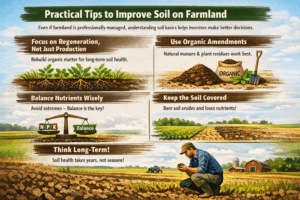
Here are some practical, proven ways to support soil health:
- You should focus on soil regeneration, and not just the production. It is because most of the land problems start when the soil is pushed too hard. So, soil generation farming will help you rebuild the organic matter.
- Soil responds better to natural nourishment than to harsh chemicals. Which is why it’s good to go with Organic soil improvements that use natural manure and plant residues.
- Contrary to popular belief, more nutrients do not always mean better soil. Balance matters! And that’s exactly what a good soil nutrient management does by avoiding the extremes!
- Bare soil is vulnerable, and it erodes quickly, washing the nutrients away!
- Lastly, the soil does not improve overnight, and it should not be treated that way either! Strong soil fertility management works over years, not seasons, and that’s when it becomes productive!
Also Read : Why Soil Testing is Important Before Buying Agricultural Land
Conclusion
Soil health is not a trend that will come and go. Its a foundation for everything to be in place. So yes, understanding what is the importance of soil is changing the way farmland investments are seen. If you have healthy soil, it will protect the land value, improve productivity, reduce long-term risk, and strengthen farmland investment return in ways that no short-term strategy can ever match.
The importance of improving soil use lies in thinking beyond today’s yields and focusing on how your land will perform over decades. With the help of soil regeneration farming, organic soil improvement, and thoughtful soil fertility management, your farm will become stronger than ever! And well, for that, you now have SBC earthfullness. Here we will manage it for you so you can get returns from a healthy soil!
Frequently Asked Questions
1. Why is soil health important for farmland ROI?
Because soil directly affects the productivity, input costs, and longevity of the land. Healthy soil delivers stable yields and stronger farmland investment returns over time.
2. How does soil regeneration farming improve long-term productivity?
With the help of soil regeneration farming, you can rebuild organic matter and microbial life. This will then allow the soil to sustain crops without a lot of external inputs.
3. What are the best soil fertility management practices?
When someone talks about balanced soil fertility management, it means organic inputs, crop rotation, minimal tillage, and proper soil nutrient management.
4. How can organic soil improvement increase farmland value?
Organic soil improvement strengthens soil structure, improves water retention, and enhances long-term productivity. This is making farmland more resilient and valuable!