

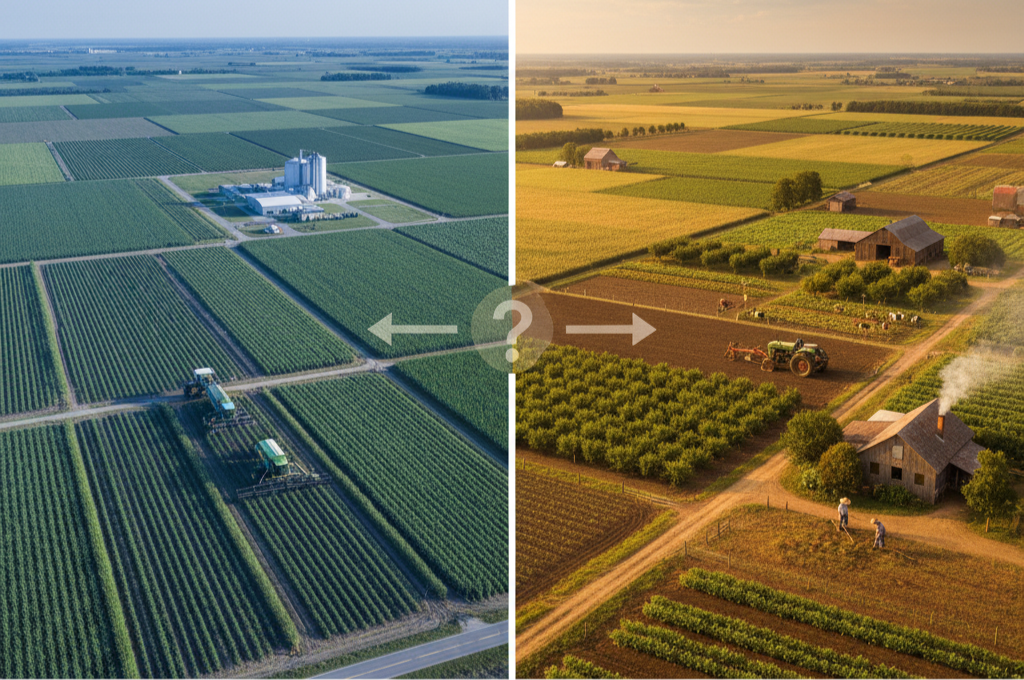

Imagine you could own a piece of land that grows in value year after year, and at the same time, earn from the crops. And guess what? That too, without personally doing the day-to-day farming work. That’s the idea behind managed farmland investment and often the first question investors ask is what is a managed farmland. But then there is the traditional path, which is to become your own farmer, running operations yourself, aka, doing independent farming.
Which one makes more sense to an investor today? In this article, we will discuss exactly that by walking you through Managed Farmland vs Independent Farming. We will compare the pros and cons, real risks, decision points, and finally you will get which one is best for you!
By the end of this, you will have a clear lens through which to view farmland investment opportunities, get a realistic feel for farmland investment returns, understand how to invest in agriculture farms, and decide whether managed or independent farming is closer to your “best farmland investment” goal. So without any further ado, let’s jump right into it!
What Is Managed Farmland & Independent Farming?
Let’s start with their definitions.
What is a Managed Farmland?
In a managed farmland investment setup, you (the investor) own the land, which clearly explains what is a managed farmland, but you don’t actually have to do the farming. Instead, a professional management team handles all farming operations. So from soil prep, planting, irrigation, pest control, harvesting, to marketing the produce, everything will be done FOR YOU. All you have to do is receive your share of profits, or a fixed return (depending on the contract).

At SBC Earthfulness, we offer eco-friendly farm plots near Bangalore / Hosur with amenities, community design, and managed agricultural operations. Our model basically allows you to experience the benefits of long-term investment in agriculture land without getting your hands muddy every day. Isn’t that amazing?
What is Independent Farming?
Things are a lot different here with Independent farming. It is because here, the landowner is also the farmer. So you are in control of all the decisions, like which crop to grow, timing, selling it, etc. Basically, you do a full-time job! And there is no doubt that Independent farming gives you the whole control, but it also places all the operational burden, risks, and decisions on your plate. For this one, you need strong agronomic knowledge, the right connections (labour, input suppliers, markets), and, well, lots and lots of time.
To summarise that for you, here is a table:
| Feature | Managed Farmland | Independent Farming |
| Control over day-to-day | Low (Delegated)q | High |
| Effort & Time | Minimal/ Passive | Significant |
| Expertise needed | Provided by the manager | Must have or hire |
| Risk Exposure | Shared or Mitigated | All borne by you |
| Upside share | Shared, less volatile | Full upside if a good year |
| Scalability | Easier | More challenging |
Pros & Cons: Managed Farmland vs. Independent Farming
Let’s talk through what each side gives you: what you stand to gain and where the pitfalls lie:
Pros of Managed Farmland:
- You don’t have to deal with daily fam hassles because the management team does that for you. This is actually a pretty big reason why investors prefer managed farmlands.
- Here, the experts handle operations so you will have a greater chance for optimized yields, better input use, disease control, and contingency planning.
- You can own multiple plots or acres in different areas. So that’s there!
- You gain from farmland investment returns via land appreciation and farming income, making it a stable investment in agriculture land.
- Last but not least, you get a whole new lifestyle!
Cons of Managed Farmland:
- The management fee can be high at times.
- You may not have direct say in which crop you wish to grow, but at SBC Earthfulness, we keep that transparency, too!
- If the farm management is weak, then your returns will suffer.
Pros of Independent Farming
- You pick the corps, methods, and market, and take full reward if things go well!
- In boom seasons, all profits will belong to you, and you only!
- You can always experiment without having to think about what anyone says.
- Even though it comes with a higher risk, as there are no manager fees, you keep all the margins.
Cons of Independent Farming:
- You carry all the risks like crop failure, pest attack, and weather shock. Literally all of them fall on you!
- Farming requires day-to-day decisions, supply chain logistics, labour management, and so you will need to give a lot of time to learn and do these.
- As you expand, managing multiple plots will become more complex.
- You need to invest in infrastructure, tools, labour, inputs, even before the yields begin.
- You must find buyers!
How to Decide as an Investor
Everyone has their own goals, constraints, and preferences, so how does one choose, keeping all that in mind? Well, you will need to ask yourself some tough questions, such as:
- Do you want to farm or own?
- Do you have agronomic knowledge or the ability to hire good farm managers? If you said yes, then independent farming might work for you!
- Managed farmlands often cushion the downside, as there are professionals. Do you think you can take the risk of not having experts on board?
- Is your capital buffer low? If yes, Independent farming can put you at a loss.
-
Do you plan on scaling to multiple plots across zones? If so, then Managed models will make it easy for you and clarify how to invest in agriculture farms wisely!
Here are some other things you should keep in mind:
- When some investors want more control and have knowledge of farming, they can go or independent farming.
- While other investors prefer peace and letting experts handle the complex jargon.
- Independent farming is more like private property!
- In any case, make sure to always check for a clear title and no disputes in whichever property you go for.
Risks To Be Aware Of!
No investment is flawless, especially in the world of farmlands. So, let’s talk about the risks you must know before stepping in:
- Land may have an unclear title, pending litigation, disputes, etc.
- There is also operational risk!
- Prices may dip and fluctuate.
- Water and Irrigation risk might not seem big, but it can cause a lot of problems.
- Management risk also comes if you don’t go for the good ones!
Also Read : Top 5 Profitable Agriculture Business Ideas for Your Farmland
Conclusion
If you ask us about which one is better or not, then the honest answer would be Managed Farmlands. For most investors, time is money, and why would you spend your time on one land when you can have your hands on multiple properties at once? If we talk about managed farmlands, then it comes with a balanced path, where you give some control to the experts, but get your peace of mind and, of course, a risk that is not 100% on your shoulders alone!
Frequently Asked Questions
Q1. What is managed farmland and how does it work?
Managed farmland is an investment model where you own the land while a professional team takes care of all farming activities such as planting, maintenance, and harvesting, allowing you to earn returns without active involvement.
Q2. What is the key difference between managed farmland and independent farming?
The main difference lies in control and effort. Managed farmland is passive with expert management, whereas independent farming requires full involvement, decision-making, and operational responsibility from the landowner.
Q3. Which option offers better farmland investment returns?
Managed farmland offers more stable and less volatile returns due to professional management, while independent farming can generate higher profits in good seasons but carries significantly higher risks.
Q4. Is managed farmland a good option for beginners in agriculture investment?
Yes, managed farmland is ideal for beginners as it eliminates the need for farming expertise, reduces risk exposure, and provides a structured approach to investing in agriculture land.
Q5. What risks should investors consider before choosing farmland investment?
Investors should evaluate risks such as land title issues, water availability, market price fluctuations, operational challenges, and management quality before making a decision.