

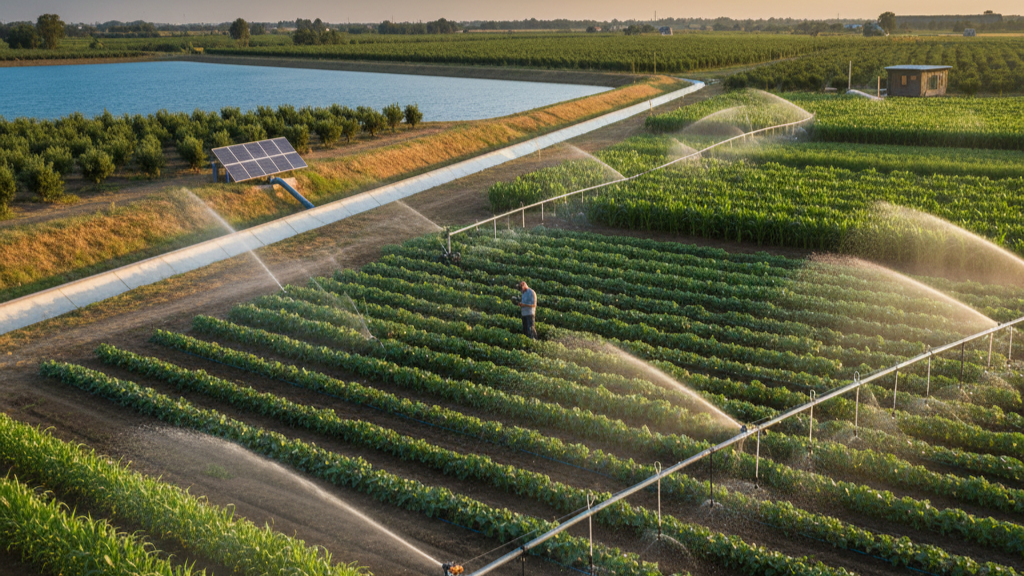

Water. Sounds pretty basic, right? But when you think of farmland, sustainability, and long-term productivity, water management isn’t just one of the boxes to tick. It’s the foundation everything else rests on. If you get it wrong, the crops struggle, soil quality drops, and your costs? Forget about them! But, well, on the brighter side, if you do get it right, your land feels alive with greener fields, higher yields, and a future that does not depend on luck.
That’s what water management in agriculture is really about. Every drop is used wisely as we let science, not guesswork, do the heavy lifting. In this article below, we will walk you through how smart irrigation of farmland makes all the difference, the real benefits of drip irrigation, and why it’s so relevant for managed farmlands. We’ll also talk about the challenges that sneak up along the way.
So let’s begin!
What Is Water Management in Agriculture?
When we say “water management in agriculture,” we mean all the strategies, tools, and decisions that make sure that your farmland gets the right amount of water, at the right time, with minimal waste. So really, it’s not just turning on sprinklers and hoping for the best. A lot goes into planning, measuring, storing, distributing, and maintaining.
And a big part of this irrigation water management is actually how you deliver water to your crops. That too, in a controlled way so that there is the least amount of losses, whether it is to evaporation, run-offs, or leakage. Yes, these little things, which you might not have any control over, also need planning to work right for your crops.
But if we see beyond just the irrigation part, the water management in agriculture also involves:
- Capturing rainwater or runoff
- Using storage systems (ponds, tanks) that highlight the advantages of agricultural irrigation ponds
- Recharging groundwater
- Managing field drainage
- Monitoring soil moisture and crop demand
All this aligns perfectly with sustainable agriculture water management. How? The whole system is all about making sure that water is not being overused, natural systems are not degraded, and no harm is caused to the soil and downstream ecosystems. If we sum it up in short:
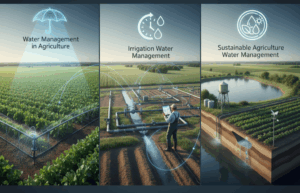
- Water management in agriculture = the umbrella
- Irrigation water management = the “delivery and scheduling” subset
- Sustainable agriculture water management = the philosophy/goal
Top Benefits of Water Management and Irrigation in Farmland
Now that your basics are clear, it’s time we talk about the biggest benefits of drip irrigation and how the whole thing ties perfectly for someone who believes in a sustainable lifestyle, especially when focusing on the benefits of irrigated row crop farmland.
-
Saves Water
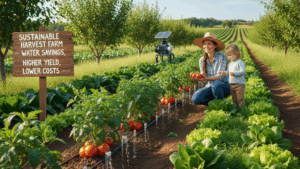
Let’s start with the most obvious one: saving water. One of the best things about drip irrigation is how precise it is. Instead of spraying or flooding your fields, it delivers the water slowly and directly to the roots, which is well, exactly where it is needed.
-
Higher Yield, Better Quality
Here’s the fun part: when your plants get just the right amount of water, they thrive. No stress, no “too dry–too wet” cycles, but just consistent moisture and nutrients. With proper irrigation of farmland, crops grow healthier and stronger. What does this mean? This means you can get better yield and superior quality produce, showcasing the true benefits of irrigated row crop farmland.
-
Cost & Energy Savings
You know what’s something every farmer loves to hear? “Less waste equals less cost.”
It can only happen when you reduce unnecessary water usage, so that your pumping and energy bills automatically go down. Because hey, the drip systems usually work at low pressure, which means they need less power than high-pressure sprinklers.
-
Fewer Weeds, Healthier Soil
This is one of those underrated benefits that every grower appreciates once they see it. Because drip irrigation only waters the plant’s root area, it does not give weeds much of a chance to grow between the rows. And, since the leaves stay dry, you also reduce the risk of fungal diseases, mold, or other moisture-related infections.
-
Environmental & Ecosystem Benefits
Water management in agriculture isn’t just about you, but it’s also about the land around you. Especially if it is done smartly, you can actually prevent the runoff that carries fertilizers and chemicals into rivers and lakes. It’s truly one of those win-win situations where your farm thrives and nature breathes easier, supported by systems that leverage the advantages of agricultural irrigation ponds.
Also Read : Why More Families Are Choosing Managed Farmlands Over Flats
Challenges To Watch Out For
Like most good things, proper water and irrigation systems come with their own set of hurdles. They’re not deal-breakers, but definitely some things to be mindful of before you dive in. So let’s go over a few of them:
- Setting up drip systems, sensors, pipes, storage ponds, and pumps can actually be a little heavy on the pocket in the beginning. But that is like a one-time investment!
- Like any system, drip irrigation needs some care and maintenance.
- Unless you go for managed farmlands, you will have to put time into learning about all the tech, sensors, and data to monitor.
- Your system is only as good as the water you feed into it. If the water is full of silt, salts, or minerals, it can clog emitters or damage pipes.
-
Every piece of land is different, so the soil needs to be studied before you go ahead, along with understanding what is irrigation system for optimal setup.
Final Thoughts
Water management in agriculture is no longer optional in a world of water stress. It’s actually foundational. Irrigation water management is often at the heart of it. It’s all about how you deliver, monitor, and control water to your crops. But you know when the real magic starts? It’s when you embed that within sustainable agriculture water management, make sure your practices last, support the land, respect ecosystems, and deliver long-term returns.
Sure, the benefits of drip irrigation are pretty amazing, whether it is saving water to boosting yield. But like anything worthwhile, it comes with a few watch-outs: the setup costs, regular maintenance, and making sure the system is designed and managed right, especially when it’s shared across a larger farmland community.
Discover the benefits of managed farmland water systems and irrigation solutions. See How You Can Benefit