


Over the past years, farmland has slowly started appearing in conversations that once only revolved around apartments, stocks, or gold. Maybe you’re imagining a quiet weekend retreat. Maybe you’re thinking about owning land before prices rise further. Or maybe you simply like the idea of having something real and tangible in your investment portfolio.
We always encourage investors to slow down, ask questions, and learn how farmland works before purchasing it. At SBC Earthfulness, we regularly meet investors who are excited about owning land but unsure where to begin. That’s completely normal. Land is very different from buying a flat or investing in stocks.
But today, with managed farmland investment, people are getting more clarity and support. Now, before we talk about risks, let’s walk through what you should really understand as an investor.
Why Farmland Investment Is Becoming Popular
Let’s start with a simple question: why are so many people suddenly interested in farmland? While part of the answer is lifestyle, there is more you should know:
- You can see how urban areas keep growing, and people are starting to feel the pressure of crowded spaces and busy lifestyles.
- Many investors now actually want something that is slower, greener, and a little more personal.
- Farmland will give you the option of weekend escapes or future farmhouse living, which will be a good break from city life.
- Many people today are curious about organic farming, gardening, or simply living closer to nature.
- Planned farmland communities now make it easier for urban investors to participate without needing farming experience.
7 Major Farmland Investment Risks Every Investor Should Know
Before you invest in farmland, it will help you to pause and look at the responsibilities and risks that come along with it. Here is what you should know:
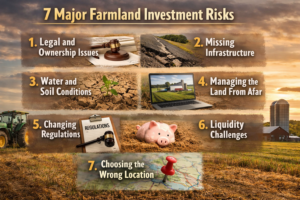
1. Legal and Ownership Issues
Land records in many places can be complicated. A plot might have been passed down through families, divided between relatives, or sold multiple times over the years. If the documents aren’t clear, things can get messy, and believe us, you do not need that!
2. Missing Infrastructure
A piece of farmland might look peaceful when you visit it. You might see the trees around, open skies, fresh air, but then the real questions will hit you:
- Is there a proper road to reach the land?
- Is there a reliable water source?
- Is electricity available nearby?
These things really matter because without them, even the most beautiful land can end up sitting unused for years.
3. Water and Soil Conditions
The demand for farmland depends on the nature, which means the land itself matters a lot. And well, not all soil is the same. Some areas can be more fertile and great for growing crops or planting trees. Others may struggle to support much at all. So yes, soil and a reliable water source nearby are actually very important to have!
4. Managing the Land From Afar
Now we want you to think about this for a moment. If the land is two or three hours away from where you live, how often will you visit? At first, it might feel manageable, but over time, the land needs attention, the fencing needs fixing, the irrigation needs checking, and who will keep an eye on the property?
That’s something you never have to worry about with SBC Earthfulness-managed farmlands.
5. Changing Regulations
Land also comes with rules, and different regions have different regulations around agricultural land. Sometimes there are restrictions on what you build, how the land can be used, and who is even allowed to buy it.
6. Liquidity Challenges
When people invest in property, they often assume they’ll be able to sell it whenever they want. Unlike city apartments, farmlands can be niche. That means selling it might take a little longer, but give you bigger returns.
7. Choosing the Wrong Location
Finally, like we always say, location matters a lot. Two pieces of land may look similar, but their future value can be completely different depending on where they are. So the land near growing cities or improving infrastructure usually attracts more interest over time.
So before buying farmland, it’s always worth asking: what does this area look like five or ten years from now?
How Managed Farmland Investment Helps Reduce These Risks
If you’ve read through the risks above, you might be thinking something like this: “Okay… farmland sounds interesting, but it also sounds like a lot to handle.” And honestly, that’s a fair reaction.
However, managed farmlands actually help to reduce the risks as:
- Legal checks are usually done beforehand.
- Infrastructure like roads, water access, and basic utilities is already planned.
- With managed farmland investment, you get professional land management.
- Projects often evaluate soil quality and water availability, so you will definitely have better planning of water and soil.
- There is lower operational stress for investors, so you can still own the land, and you don’t have to actively manage it.
Final Thoughts
If you’re considering farmland as an investment, the most important thing you can do is stay curious and informed. Once you take your time, ask the right questions, visit the land, and understand the region, comes the point where you should learn about the risks of farmland investment.
In reality, most farmland investment risks arise when people rush into buying land without understanding it fully. At SBC Earthfulness, we believe farmland should feel both secure and meaningful.
Frequently Asked Questions
1. Is Farmland Still a Good Investment in 2026?
Yes, farmland continues to attract investors because the land supply is actually limited while the demand continues to grow. However, you should keep in mind the farmland investment risks before you buy the land.
2. What are the main risks of farmland investment?
Some common farmland investment risks include legal ownership issues, lack of infrastructure, water shortages, and management challenges.
3. How can investors reduce farmland investment risks?
You can reduce farmland investment risks by researching the location carefully, verifying legal documentation, checking soil and water conditions, and considering structured options like managed farmland investment.
4. Is farmland a good long-term investment?
Farmland can be a strong long-term asset when it is located in growing regions and supported by good infrastructure.
5. Is farmland investment safe?
Farmland can be safe when investors understand the risks of farmland investment and approach land ownership with proper research and planning.