



Hey there! If you are looking to buy land in Tamil Nadu or just want to understand your documents better, you’ve probably come across the question: What is patta chitta? You might also be wondering about the difference between patta and chitta, or how exactly to apply for one. Don’t worry, you’re in the right place.
At SBC Eartfulness, we believe in making land ownership simple, transparent, and worry-free. So, whether you are investing in managed farmland with us or just checking your own property records, let us tell you something: Knowing what patta chitta is or how to apply patta online in Tamil can actually save you from a lot of headaches later!
So literally all you need to know about patta and chitta is right here. Let’s begin!
What Are Patta and Chitta?
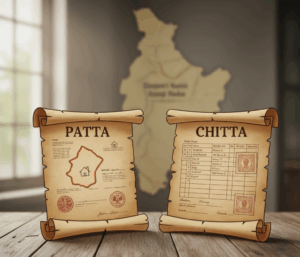
We are going to start with the basics: what is patta chitta? In Tamil Nadu, when you own or buy a plot of land, there are two key documents you will hear about: a patta and a chitta. And well, historically they were separate, but today, they go hand in hand, which is why understanding each can actually help you know what exactly you are dealing with.
Patta
A Patta is a legal document that is used by the Tamil Nadu government (revenue department) that shows your name (or the land-owner’s name) as the holder of the land, the survey number of the land, and the village/taluk/district. Also, there are other details, such as whether it is a wetland or dry land, and what the area is. So often, you might as well hear people call it “record or rights” for land.
Chitta
The Chitta, on the other hand, is a land revenue document. This is maintained by the Village Administrative Office (VAO) or a Taluk office that provides additional details. These can be like classification of land, that is, whether it is a wetland (nanjai) or dry (punjai), size, subdivision, and basically more of the land details.
So what exactly is patta chitta?
When you ask what patta chitta is, you’re really asking about how these two documents work together (or now largely as one). In Tamil Nadu, these two records have been merged or integrated for ease of land-record maintenance and verification.
Difference Between Patta and Chitta
Now that you know what each of them is, it’s time to look at the difference between patta and chitta in one clear table. This will help you see side-by-side what part each document plays.
| Feature | Patta | Chitta |
| Purpose | Proof of ownership, revenue record in the owner’s name | Details of the land: area, subdivision, classification, size, nature of land |
| Issued by | Revenue department (in the owner’s name) | VAO / Taluk office (historical) |
| Key details included | Owner name, survey & subdivision number, village/taluk/district, land type (wet/dry), area, tax data | Survey & sub-division numbers, land classification (nanjai/punjai), size, ownership history |
| Usage | For proving you own the land, for sale/transfer, for banking/loans | For confirming the land type, size, classification, and useful for development, conversion |
| Today’s status | Still issued and critical | Many sources say Chitta was merged into Patta (post-2015) — Chitta may not be issued separately. |
So when you ask what is patta chitta, you’re actually dealing with a document (or two historically) that covers both “Who owns this land?” (Patta) and “What exactly is this land?” (Chitta) And once you understand the difference between patta and chitta means you’ll know what to check when buying land!
Why These Documents Are Important (Especially in Tamil Nadu)
Let’s get real for a second: why should you even care about wpatta chitta isitta and the difference between patta and chitta? In simple words, because if you’re buying land (especially in Tamil Nadu), missing or faulty documents can mess you up. So here is why it matters more than you think:
- The Patta actually shows that you (or the seller) legally own the land. And so, without it, there is a lot of risk of dispute.
- The Chitta part is what tells you whether it’s wetland or dryland. What’s the area? Subdivision? All this matters!
- Whether it is banks or buyers, everyone asks for clear documents, and you’d better have them prepared.
- Once you get it and understand what patta chitta is, you can have an eye on red flags and avoid fraud and disputes that many fall into.
Also Read : What Documents Are Needed For Tamil Nadu Land Registration
Step-By-Step Guide: How To Apply Patta Online In Tamil
Okay, let’s get down to business. If you are buying a plot in Tamil Nadu, especially from here is how you can go on with the whole process:
Step 1: Get the details from the seller
This is where you should ask for the survey number, sub-division number, Village, Taluk, and District. Also, make sure you are asking for the existing Patta (and if available, Chitta).
Step 2: Use the Tamil Nadu e-Services portal
In this second step, you have to verify the documents online. You can do this via the official site of your state. There you can:
- Select the District, Taluk, and village.
- Choose search by Patta Number or Survey Number & Subdivision.
- Enter required details, get OTP on mobile, and view/download the document.
Step 3: Cross-match document details
This is probably one of the most important steps, as this is where you have to be very cautious. So check these against what you physically see on site:
- Owner’s name matches seller (and is rightly transferred)
- Survey & subdivision numbers match
- The area of land (in acres/hectares) corresponds to what the seller says
- Land type: wetland/nanjai or dryland/punjai (important)
- No pending issues/encumbrances mentioned
Step 4: Check transfer/mutation status
This is a make-or-break step. So these are some things you should keep in mind:
- You should ask the seller to show you the Patta and confirm whether it has been updated to the seller’s name.
- If the ownership has changed very recently, then Patta should technically reflect that change. If not, you are basically inviting a legal mess.
- Also, check the Chitta details to make sure the land classification (nanjai/punjai, survey & subdivision numbers) is correct and matches what you see on site.
- While you are at it, do not forget to ask about the Encumbrance Certificate (EC). This is what shows whether legal claims, mortgages on the land.
- Worst-case scenario? A pending case or an unpaid loan is attached to the plot. So EC will actually help you flag it.
- If there is no EC or a suspicious EC? Stop and investigate.
Here is a quick reminder for you: asking “what is patta chitta” gets you to this exact point: ownership + classification, so don’t rush.
Step 5: Confirmation
If you are buying through SBC Earthfulness, then believe us, you have done most of the heavy lifting! And to be 100% sure, here are three things you should confirm:
- Document audit done
- Transparency
- Mutation plan
Step 6: Final buyer checklist
But hey, before you sign off on or make that final payment, we suggest you run through this short checklist and tick every box:
- You have a copy of the Patta (and Chitta, where needed) with your name.
- You have downloaded and saved a digital copy!
- You took screenshots or saved the receipt from the official Patta/Chitta search page as proof.
- You have the signed sale deed and payment receipts, whether it is originals or scans.
- You have the EC and are sure that there are no pending claims.
Common Mistakes and How to Avoid Them
Here is a gentle warning for you: lots of folks mess this up. Here are typical traps and how you dodge them like a pro:
- Assuming Patta is not alone. Because we know people who would think, “Oh, I have a Patta, so I’m set”. But if the Chitta part (land type, classification) is wrong or outdated, you could be stuck.
- Not verifying online or via the portal is another big mistake. If you just take the seller’s word, that’s a bad idea, as fake documents are a very real-world thing!
- If you are going solo and not with SBC earthfullness, then make sure you are asking for clear credentials of the provider, and keep a check with the checklist!
- Last but not least, you should always check whether the land is nanjai or punjai, whether construction or non-agricultural use is even allowed!
So there you have it! A walk-through of what is patta chitta, and how you can understand the difference between patta and chitta. Plus, now you also know how you can proceed with the best foot forward when it comes to buying land in Tamil Nadu with our “How to apply patta online in Tamil Nadu guide!” If you keep this guide handy and just follow the step-by-step checklist, trust us, you will make a far more confident purchase!
Frequently Asked Questions
Q1. What is patta chitta and why is it important for buying land in Tamil Nadu?
Patta chitta refers to two key land documents — Patta proves ownership and Chitta confirms land details like type and size. Together, they protect buyers from fraud, disputes, and legal trouble when purchasing land in Tamil Nadu.
Q2. What is the difference between patta and chitta in Tamil Nadu?
Patta is issued by the Revenue Department and proves who owns the land. Chitta, maintained by the VAO/Taluk office, details the land’s classification, area, and subdivision. Post-2015, Chitta has largely been merged into Patta for easier record-keeping.
Q3. Can I verify patta chitta documents online before buying land in Tamil Nadu?
Yes! Always cross-check the owner’s name, survey number, land type, and area on Tamil Nadu’s official portal. Never rely solely on the seller’s documents — online verification helps you spot fake or outdated records easily.
Q4. What happens if patta is not updated in the seller’s name?
It’s a serious red flag! If the Patta doesn’t reflect the current seller’s name after a recent ownership change, you risk stepping into a legal dispute. Always confirm mutation status and check the Encumbrance Certificate before finalising any land purchase.