

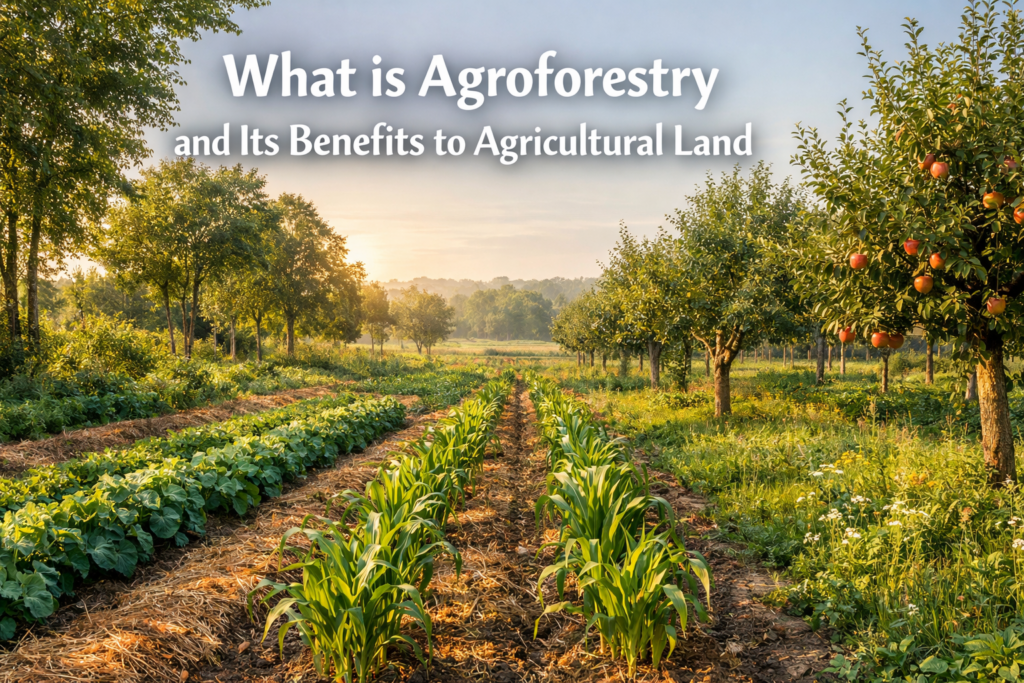

Imagine walking through a piece of land that feels alive with birds nesting, soft soil under your feet, and trees quietly protecting from harsh sunlight. We believe that land works best when it is treated as an ecosystem, and not just a production unit. And our belief in SBC earthfulness is what stands us apart.
Today, we will talk about what is agroforestry and why it is becoming one of the most important approaches to land development.
Everyone wants spaces that generate food, support biodiversity, and still feel like nature. The importance of agroforestry lies in how it meets all of these goals together.
In this article, we will explain why agroforestry for sustainable agriculture is no longer a theory, but what we religiously follow here. Now, you can be a part of it as well.
Table of Contents
ToggleWhat is Agroforestry?
So, what is agroforestry in simple terms? Agroforestry is a land-use system that combines trees with crops or livestock on the same land. Basically, instead of clearing trees to grow crops, agroforestry keeps trees as part of the farm design.
And no, these trees are not random but are carefully selected and positioned to improve soil, manage water, and protect crops.
When people first hear what is agroforestry, they often imagine wild forests mixed with crops. But that’s not the reality.
If you see closely, it looks more like a thoughtfully arranged landscape: fruit trees beside vegetables, timber trees along boundaries, shade trees protecting the soil, and plants growing at different heights.
Clearly, the importance of agroforestry is that it turns land into a living system rather than a production machine. This is what makes agroforestry for sustainable agriculture practical rather than idealistic.
Why Agroforestry is Important for Modern Agriculture
Now that you know what Agroforestry is, it’s time you understand why it holds its relevance in the modern world. Everyone is thriving in cities, and you might think that people barely ever think of agriculture. But, well, that’s rarely ever the truth.
Modern farming is very much relevant, but due to climate change and the environment evolving, it is facing pressure from all left, right, and center. Soil is thinning. Water is unpredictable. Summers are hotter. Costs are higher. And yet, land is expected to give more every year.
- You will notice how the importance of agroforestry comes from how quietly it solves many of these problems at once. The trees help to slow the wind. They cool the air. And even hold the soil in place. You see the fallen leaves?
- That becomes food for microorganisms underground. That is why agroforestry for soil management works so well over time. So quiet, literally, instead of forcing nutrients into the land, agroforestry builds them naturally.
- There is also a climate story here. The trees actually absorb carbon from the air and store it in their trunks, roots, and the soil below. That’s when Carbon sequestration through agroforestry allows farmland to become part of the climate solution. All it needs is time, care, and good planning.
Benefits of Agroforestry to Agricultural Land
Here are 5 benefits and ways agroforestry improves land:
-
Healthier Soil That Recovers Over Time
One of the most important benefits of agroforestry is what happens below the surface. Tree roots hold the soil together during heavy rain.
Dry leaves fall and break down into natural compost. Shade keeps the ground from baking in the sun.
All of this makes agroforestry for soil management especially useful for land that has been exhausted by years of chemical inputs or overuse.
-
Crops That Suffer Less From Heat and Wind
Anyone who works with crops knows how brutal wind and heat can be. And one of the most powerful advantages of agroforestry is that trees act like natural shields.
They slow down strong winds and reduce temperature extremes. Crops growing in these conditions lose less moisture and experience less stress.
-
Climate Support Through Living Carbon Storage
Carbon sequestration through agroforestry is not something you see immediately, but it is happening quietly in the background. The way it happens is it pulls the carbon dioxide out of the air and stores it in their trunks, branches, roots, and the soil itself.
-
More Than One Source of Income
Another practical advantage of agroforestry is that the land does not depend on a single crop anymore. Fruit trees, fodder plants, timber species, herbs, and vegetables can grow together when planned properly.
-
Land That Stays Productive for the Long Term
Some framing systems push the land hard and leave it weaker every year. While the benefits of agroforestry actually work in the opposite direction.
Better water retention, fewer chemical inputs, stronger soil structure, and more insects and birds slowly, to build a system that is stable.
Conventional Farming vs Agroforestry
The table below will help you understand the difference better and come close to building a sustainable life for yourself and your loved ones:
| Feature | Conventional Farming | Agroforestry |
| Soil health | Depletes over time | Builds fertility naturally |
| Water retention | Low | High due to tree cover |
| Climate impact | Carbon-emitting | Carbon sequestration through agroforestry |
| Income sources | Single crop | Multiple products |
| Ecosystem support | Limited | Strong biodiversity |
How Agroforestry Supports Soil Management
Bare soil is vulnerable. It dries out. It erodes. It loses nutrients. Agroforestry for soil management works because trees act like long-term caretakers of the ground.
So, their roots hold soil together. Their shade prevents overheating. Their fallen leaves feed the earth.
We often explain the importance of agroforestry using a simple image: soil is like skin. Covered skin stays healthy. Exposed skin burns and cracks. Agroforestry keeps land covered, protected, and fed.
For people who care about owning land that ages well, not just land that produces fast, the importance of agroforestry becomes emotional as much as practical. Land becomes something you build with, not something you use up.
Monoculture vs Agroforestry for Soil
| Aspect | Monoculture | Agroforestry |
| Root depth | Shallow | Multi-layered |
| Microbial life | Low | High |
| Erosion risk | High | Low |
| Nutrient cycle | External inputs | Natural recycling |
| Soil structure | Weak | Strong |
Final Thoughts
When it comes to understanding what agroforestry is, you also need to understand the land under your feet. The whole importance of agroforestry lies in how it rebuilds soil, supports climate balance, and creates landscapes that can last.
That being said, with the help of agroforestry for sustainable agriculture, land can stay productive without being stripped.
And now that’s exactly what we bring to SBC earthfulness for you. We believe that the land should be alive, and agroforestry actually helps us to build that life into every project with touch!
FAQ ‘s
1.What are the benefits of agroforestry?
The main benefits of agroforestry are getting healthier soil, better crop protection, income diversity, and climate support through carbon sequestration through agroforestry.
2. Is agroforestry good for long-term land use?
Yes. It actually helps to improve soil stability and sustain productivity. So if you are focused on land planning in the future, agroforestry will be ideal for you!
3.What is the purpose of agroforestry?
The purpose of agroforestry is to combine trees and crops in a way that protects land while also keeping it productive.
4.What are the pros and cons of agroforestry?
The advantages of agroforestry include soil regeneration and diversified income. The main challenge, however, is that trees can take time to mature and need good planning.
5.Does agroforestry really make a difference?
Absolutely yes! Agroforestry improves fertility, stabilizes yields, and strengthens agroforestry for soil management while supporting climate balance.