



If you’ve been even remotely keeping an eye on real estate trends, you’ve probably noticed one thing: farmland prices across India are quietly (and sometimes not so quietly) climbing. And we get that it’s not just about the romance of living close to nature, but investing in agricultural land is actually becoming big, especially with the rise of managed farmland investment india.
In this article, we have talked about all you need to know about the rising land appreciation rate in India and how owning cultivated land in India can be your future. So, without further ado, let’s get right into it!
The Indian Farmland Landscape in 2025
India’s relationship with farmland runs deep. At heart and even on paper, we are still an agricultural country! If you’re wondering how much agricultural land in India we actually have, then according to government data, it’s close to 60% of the country’s total land area. Now, out of that, quite a large portion is cultivated land in India that produces everything from rice and wheat to exotic fruits and organic veggies sitting in your fridge.
But here is the real deal: while the total agricultural land in India is vast, not all of it is easily available for purchase. Zoning laws, state-level restrictions, and urbanisation have played their part too in making things harder to access. This is one reason why agricultural land prices in india are moving upward. Basically, when something is limited in supply and high in demand, the market value of agricultural land rises.
And well, the point to be noted is that the land appreciation rate in India isn’t uniform. While some pockets like Bengaluru, Hyderabad, and Pune are currently hot, others are not at their best!
What’s Driving Farmland Prices Up?
If we are being totally honest, then there is no single factor that is pushing farmland prices higher. It is a combination of lifestyle trends, investment logic, and very real changes in the market value of agricultural land.
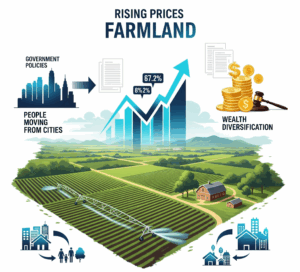
Here are the biggest drivers that are changing the whole landscape and are becoming the new talk of the town:
1. People Want To Leave The Urban Area
The cities are expanding, and the once agricultural land has suddenly taken the path of development. This huge change instantly bumps up the land appreciation rate in India for those plots. Where there is demand, there will be appreciation, and the demand is only when development is present. And in a city like Bangalore? You are standing on a gold mine!
2. Lifestyle Shifts
While the city is still a dream of many, post-2020, there has been a shift in the kind of lifestyle people want. A lot of them have started valuing open spaces, clean air, and the slower pace of rural life. Even if they don’t farm themselves, they like the idea of owning cultivated land in India for weekend retreats or organic farming, driven by the benefits of managed farmland living. If you relate to this, keep reading, we have good stuff for you ahead!
3. Wealth Diversification
When it comes to real estate investors, especially the seasoned ones, they are always looking to expand their portfolio. They have eyes on things beyond apartments and commercial property. That’s exactly where farmland investment in india is being seen as a hedge against inflation. Instead of the prices going up and down overnight, farms are a tangible asset that grows in value over time, and does not come with so many shocks.
4. Government And Policies
In some states, agricultural investments come with tax advantages or subsidies. So that adds to it! Plus, there is an increasing focus on sustainable farming, which makes the market value of agricultural land even more attractive.
5. Managed Farmlands
And of course, managed farmlands brought this new wave of investment trend, which made everyone turn their heads. Like at SBC Earthfulness, we have opened the gates for people who otherwise wouldn’t have touched farming. Here, you don’t have to be a farmer to commercialize your farm and sell the crops, making managed farmland investment india more accessible than ever.
ROI Components in Managed Farmland
Let’s break down where your returns actually come from when you own managed farmland:
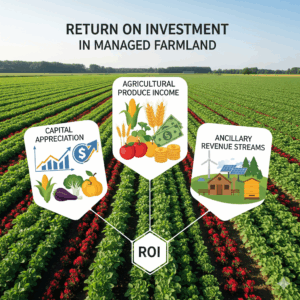
1. Capital Appreciation
This is truly one of the biggest ones! As farmland prices rise over time, the land appreciation rate in India directly impacts your wealth. To make it easy, here is a simple example:
If you bought at ₹40 lakh an acre and the area sees a 10% annual rise, you’re looking at ₹64 lakh in just five years! That’s literally how much it can impact.
2. Agricultural Produce Income
Now that you own a farm, you also have an option to make income from it. Especially with managed farmlands, you get full support from professionals who can run your farm, while you generate money from crops, orchards, or even timber.
This way, you can turn your cultivated land in India into a productive, income-generating asset. With this, you don’t have to wait years to get your returns, as your business will also bring you returns!
3. Ancillary Revenue Streams
Talking of business models, managed farmland companies sometimes explore extras like farm tourism, farm stays, or selling organic produce under a premium brand. And this is the beauty of this model. It blends the steady market value of agricultural land growth with annual or seasonal income streams and highlights the benefits of managed farmland living.
There is no doubt that it is one of the reasons why more and more people are comfortable farmland investment in india now than ever before!
Benefits vs. Risks of Managed Farmland
Let’s keep it real: no investment is risk-free. Whether you are just starting out or are a seasoned investor, everything comes with a potential risk. What makes you smart is your awareness, and how wisely you can navigate through it. And well, managed farmlands have plenty of upside, but you should know the pros and cons before going all in!
Benefits:
- Hands-off ownership, as there will be professionals and experts handling all the operations.
- You might make dual returns with the right strategy. Meaning, if you plan wisely, you can earn from both the land appreciation rate in India and the produce.
- There are lifestyle perks that you get, like, who doesn’t want weekend getaways on their farm?
- The market value of agricultural land typically rises over time, so you also have that inflation edge.
- Many managed farms, or at least we at SBC Earthfulness, are very true to our eco-friendly practices.
Risks:
- There can be legal hurdles! For example, state laws vary on how much agricultural land in India a non-farmer can own.
- And well, with market fluctuations, produce prices can dip, so better prepare yourself for it.
- Easy said than done, but selling agricultural land can take time. But once you do it, it will all be worth it!
- Your returns depend on the professionalism of the managing company, so make sure you choose trusted hands to grow your farm.
Conclusion
The rise in farmland prices across India in 2025 isn’t just a passing trend. In fact, it’s quite literally a part of a bigger shift in how people are thinking about wealth, lifestyle, and sustainability. Considering the land appreciation rate in India is climbing, there is a limited supply of good plots, and how easy investing in agricultural land has become (thanks to managed models), the sector is looking pretty strong for the future, even as agricultural land prices in india continue to grow.
So, for anyone who’s ever dreamed of owning a piece of green earth without getting their hands muddy every day, cultivated land in India through a managed setup might just be the sweet spot. And the best part? While the market value of agricultural land will always depend on location, demand, and policy, the long-term picture? It’s looking pretty fertile if you ask us!
Frequently Asked Questions
1. Is it good to invest in managed farmland?
Yes! If you wish to benefit from the rising farmland prices and steady land appreciation rate in India without the daily hassle of farming, then this should be on your list. Especially if you are a beginner with not much knowledge of farming, then managed models can make investing in agricultural land more convenient.
2. Why does agricultural land increase in value?
The market value of agricultural land rises due to urban expansion, limited availability, and higher demand for cultivated land in India. Plus, there is also an overall upward land appreciation rate in India.
3. What are the disadvantages of farmland?
One of the biggest disadvantages is that there can be legal restrictions on how much agricultural land in India you can own. Then come others, like potential price dips in produce and slower liquidity.