

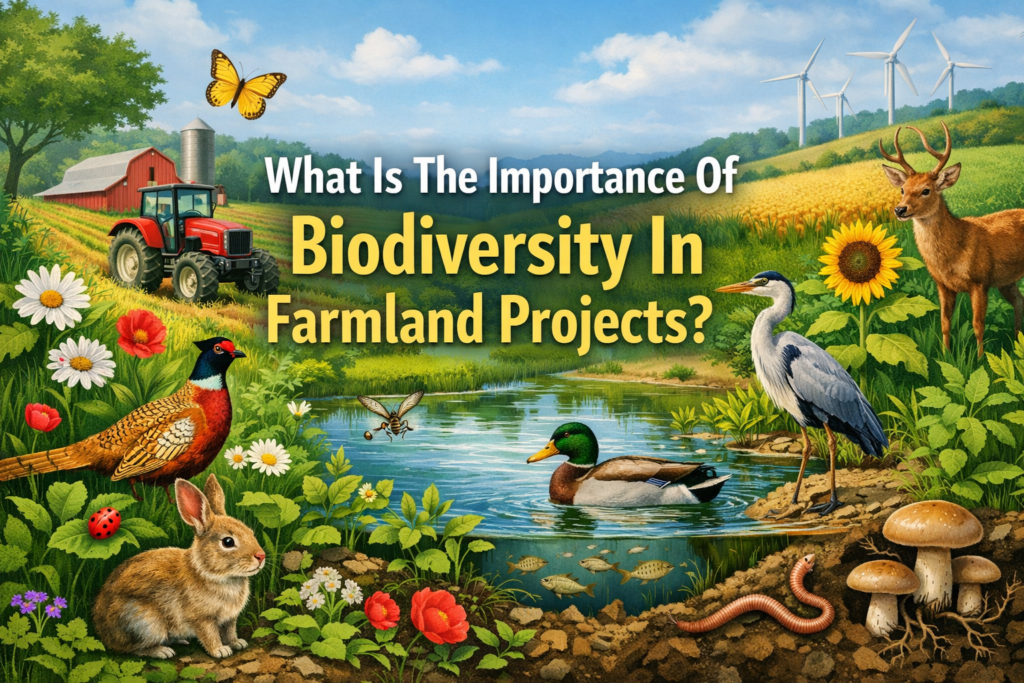

When you stand on a piece of farmland early in the morning, before machines arrive and before the sun gets too harsh, you can tell whether the land is alive or just being used. You hear birds, see insects moving between plants, and feel soil that still has moisture in it. That is proof of balance. And that balance is why the importance of biodiversity in farmland matters more today than ever.
At SBC Earthfulness, we have always believed that land has its own ecosystem, which, with the help of our managed farmlands, we can nurture. That belief naturally connects with biodiversity in farmland projects, because farms don’t exist in isolation. They shape the air, the water, the food, and the people who live around them.
Let’s dive more into this in the article below!
What Is Biodiversity in Agriculture?
Biodiversity simply means the variety of life. In farming, that variety includes crops, trees, insects, birds, animals, and the microscopic life inside the soil.
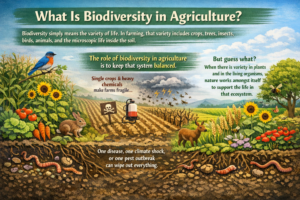
The role of biodiversity in agriculture is to keep that system balanced. Because we all know that when farms rely on a single crop and heavy chemicals, they become fragile. One disease, one climate shock, or one pest outbreak can wipe out everything.
But guess what? When there is variety in plants and in the living organisms, nature works amongst itself to support the life in that ecosystem.
The Importance of Biodiversity in Farmland
-
It keeps the soil alive and productive.
A healthy farm is not just the dirt, but literally full of tiny organisms that break down organic matter and feed crops naturally. This is why the importance of biodiversity in farmland starts from the ground up.
-
It controls pests without chemicals.
Birds, insects, and natural predators keep harmful pests in check. Instead of spraying chemicals that damage the land, farms with strong ecosystems let nature do the work.
-
It makes farms more resilient to climate change
It’s not a surprise that the weather is becoming unpredictable. And well, farms with trees, mixed crops, and healthy soil can actually handle droughts, heavy rain, and heat better than bare fields!
-
It improves crop yield and quality over time.
If you see pollinators like bees and butterflies, then that’s a sign of how much food grows and how healthy it is! It is because strong biodiversity in farmland projects truly leads to better pollination and healthier plants.
-
It protects land value for the future.
A land that supports living systems does not degrade quickly. It says fertile, attractive, and usable for years. This is why biodiversity conservation in agriculture is also a smart investment!
Conventional vs Biodiversity-Based Farming
| Feature | Conventional Farming | Biodiversity-Based Farming |
| Pest control | Chemical pesticides | Natural predators & balance |
| Soil health | Depletes over time | Improves naturally |
| Water retention | Low | High |
| Climate resilience | Weak | Strong |
| Long-term land value | Declines | Increases |
Challenges To Be Aware Of
Below are some of the biggest mistakes and challenges people get stuck with:
- Short term thinking.
- Exhausting the soil and not focusing on the productivity.
- Believing that sustainability or sustainable farming is expensive.
| Aspect | Short-Term Land Use | Long-Term Ecological Design |
| Soil quality | Declines | Improves |
| Maintenance cost | High | Lower |
| Environmental impact | Negative | Balanced |
| Property sustainability | Weak | Strong |
| Community value | Limited | Lasting |
Final Thoughts
We often think of farmland only as something that produces food. But it also produces clean air, stable water cycles, and healthy living environments. That is why the role of biodiversity in agriculture extends far beyond crops.
At SBC Earthfulness, we believe that land should be something you grow with, not something you drain. So when you choose a land that respects nature, you also choose future security and your environment.
Frequently Asked Questions
1. Why is biodiversity important in farming?
The importance of biodiversity in farmland actually lies in the balance. Different species work together to protect crops, improve soil, and regulate pests naturally. So there will be reduced chemical dependence!
2. How does biodiversity in farmland projects benefit farmers?
It improves the quality of the soil, boosts pollination, and reduces pest problems. In fact, having strong biodiversity in agriculture also makes farming more reliable over time.
3. What is the role of biodiversity in agriculture?
The main role is to basically maintain a healthy ecosystem that supports the farming naturally. This way, the food production will be efficient, while improving the state of pests, soil, and water use.
4. How can farmers improve biodiversity in farmland projects?
Farmers can improve biodiversity in farmland projects by growing diverse crops, protecting native plants, and reducing chemical use. They also create space for birds, insects, and other soil organisms that the ecosystem loves!