

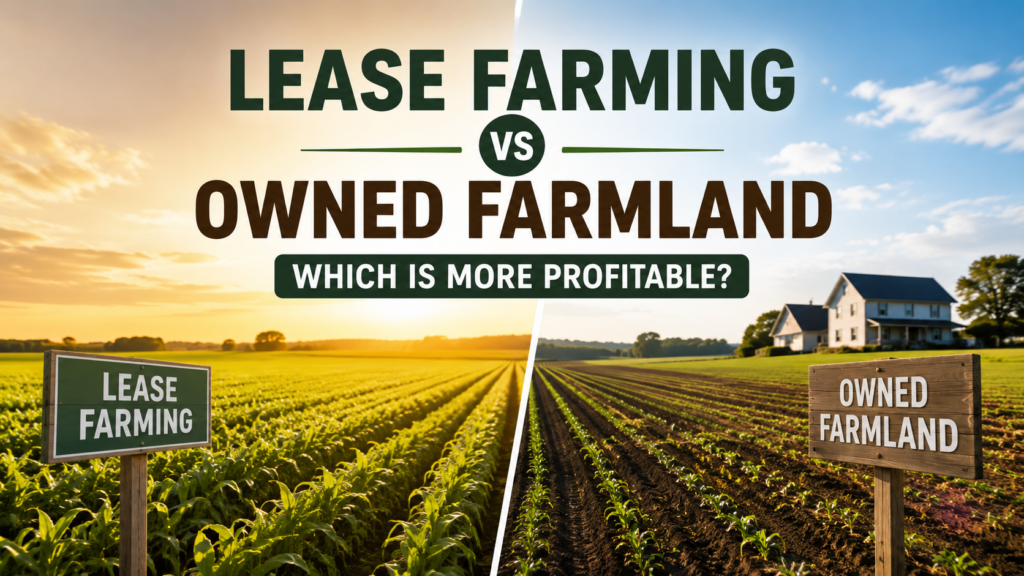

The debate over lease farming vs. owned farmland has evolved from being a simple agricultural choice to a sophisticated financial strategy. Modern investors, particularly those searching for green corridors around Hosur and Bangalore favor a more sustainable and high-yield legacy.
SBC Earthfulness’s philosophy explores the profitability, risks and strategic advantages of lease farming and owned farmland. It is a helpful guide for you to decide where you want to direct your capital.
The Agricultural Investment Shift
Agriculture no longer defines the economy alone. It is also a new ‘gold mine’ for the urban professionals and seasoned investors. A traditional real estate business yields around 2 to 3% of rental returns. On the other hand, the managed farmlands offer a dynamic alternative combining high appreciation value with good annual returns. However, the first question that many new aspirants stumble upon is whether you should rent a land for farming or secure your own title deed?
Interestingly, both have their merits and demerits. The ‘Managed Farmland’ model is pioneered by leaders in the industry like SBC Earthfulness. It bridges the gap between both the concepts. This bridging eases the operational hurdles of a leased land with the to build wealth like the ownership model.
What is Owned Farmland?
Ownership equals generational wealth. Indian agriculture considers land ownership as one of the strategic asset plays. It generates:
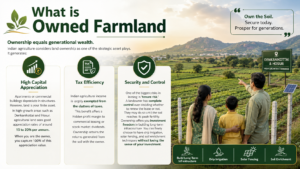
- High Capital Appreciation: Apartments or commercial buildings depreciate in structures. However, land is your finite asset. In high-growth areas such as Denkanikottai and Hosur, agricultural land sees good appreciation rates of around 15 to 20% per annum. When you are the owner, you capture 100% of this appreciation value.
- Tax Efficiency: Indian agricultural income is largely exempted from the clutters of taxes. This benefit offers a hidden profit margin to commercial leasing or stock market dividends. Ownership retains the returns generated from the soil with the owner.
- Security and Control: One of the biggest risks in leasing is ‘tenure risk.’ A landowner has complete control over deciding whether to renew the lease or not. They may do so until the soil reaches its peak fertility. Ownership offers you investment freedom in building long-term infrastructure. You can freely choose to have drip irrigation, solar fencing, and soil enrichment techniques without losing the sense of your investment.
What is Lease Farming?
Lease farming is a popular option for you if you are capital constrained or want to test the waters for a specific crop without committing for a multi-crore investment.
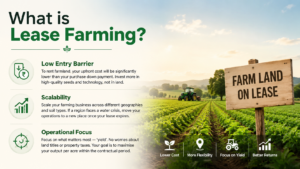
- Low Entry Barrier: To rent farmland, your upfront cost will be significantly lower than your purchase down payment. Accordingly, operational farmers enjoy the liberty to put their capital into high-quality seeds and technology rather than investing and locking it into their land.
- Scalability: Professional agro-businesses often stick to rent a land for farming. It facilitates them to scale their business quickly across different geographies to explore different soil types. In case a region faces a water crisis, a lessee enjoys the flexibility to move their operations to a new place once their lease expires.
- Operational Focus: With lease, you primarily focus on the ‘yield.’ You are not much worried about what titles your land holds or what are your property taxes. Your goal is just to maximise your output per acre within the contractual period.
The Strategic Bridge – Lease to Own Farmland
For many people, rent to own is a steep jump. This is where the lease to own farmland model comes in. You might have heard it differently as a farm lease to own. This arrangement facilitates a farmer or the investor to rent their land with a portion of payment being invested towards an eventual purchase price.
Why choose lease to own farmland?
There are several benefits of lease-to-own farmland:
- Lock-in Price: The lock-in price allows you to lock as per today’s price while you build up the capital to buy it.
- Trial Period: You have a free hand to test the soil’s productivity and the water table availability before fully committing to your business.
- Incremental Equity: It converts your monthly expense (rent) into a long-term investment.
Is Leasing Farmland Profitable?
Is leasing farmland profitable? Well, the answer to this depends entirely on how efficiently you manage it.
On average, a successful agricultural operation on leased land enjoys a margin of approximately 10 to 15%. Yet, this is highly sensitive to your input costs such as investment in labour and water. If you own the land, leasing it out generates you a passive profit. You will receive a fixed rent (typically ranging between 3 to 5% of the land value) in addition to the 15% appreciation. The total comes to around 20% annual gain with zero labor.
Also Read : Top 5 Profitable Agriculture Business Ideas for Your Farmland
If you are the tenant, you can only generate profits from a leased land if you are practicing a high-value agriculture such as organic vegetables, herbs or floriculture. Here, the yield value is high enough to cover your rental expenses and still offer you a living wage.
Smartness of the Managed Farmland
At SBC Earthfulness, we believe the ‘lease vs own’ debate has a way out in the form of Managed Farmland.
Traditional ownership often fails as urban investors do not have the time to invest in their farms. Traditional leasing fails as the tenants do not care for the long-term health assessment of the soil. Managed farmland is a good resolution to this difference as it provides:
- Clear Title Ownership: You are the clear owner of your asset and the appreciation value it generates.
- Professional Management: You get experts at your service to handle the farming and ensure high-quality soil with a maximum yield.
- Passive Returns: The passive crop share and the appreciation value remains with you without bothering much about the daily operational headache.
Are There Any Risks in Agricultural Real Estate?
Whether you choose to lease or own farmland, it comes with a certain level of risk.
Legal Due Diligence: Owners should clearly verify the titles along with their survey numbers. Verification of a ‘leased agreement’ is crucial to verify the water rights and exit clauses.
Climate Resilience: Profits can disappear overnight if you face unseasonal rain. You should therefore opt for lands demonstrating robust water harvesting structures.
Don’t Miss : Water Management and Irrigation Benefits in Managed Farmland
Market Connectivity: The profitability a farm earns directly links to how far it is from a major market. Ownership of land in a prime location ensures a resilient land value even if your crop fails.
Bottomline
So, if you are looking for a quick and low-capital way to start your seasonal agricultural business, rented farmland should be your choice. However, if you are looking at it from the perspective of wealth creation, inflation shielding and building a meaningful bond with the environment, owned farmland is your path.
Your ownership profitability is not just limited to harvest. It lies in the soil that gets more and more rich every year and then drives the land value while you enjoy a peaceful sleep. Models such as lease to own farmland offers professional management services to reduce your entry barriers.
FAQs
Q1. Is leasing farmland profitable for a beginner?
Yes, if you are a beginner focused on high-yield and short-cycle crops, leasing farmland is a good option. However, in the absence of a land appreciation, your profit will entirely depend on the market offerings and the weather conditions.
Q2. What are the typical terms for a farm lease to own agreement?
Usually, there is a 3 to 5 year lease period where a small portion of the annual rent is credited towards the final price of purchase. This is locked at the beginning of the contract year.
Q3. Between lease farming vs owned farmland, which has better tax benefits?
From a tax benefit perspective, owned farmland is always superior. In several regions, capital gains from agricultural land are exempted under specific conditions. The direct agricultural income thus becomes tax-free.
Q4. How do I find a reliable land to rent for farming?
Search for lands where the water tables are high and established following “Framer Producer Organizations” (FPOs). Alternatively, you can also consult managed farmland providers to check for sub-leasing options.
Q5. Why is “Earthfulness” important for farmland profitability?
“Earthfulness” works on long-term sustainability. You own and manage land regeneratively. This feature reduces your direct dependency on expensive chemical inputs to make the farming more profitable and resilient over years.