

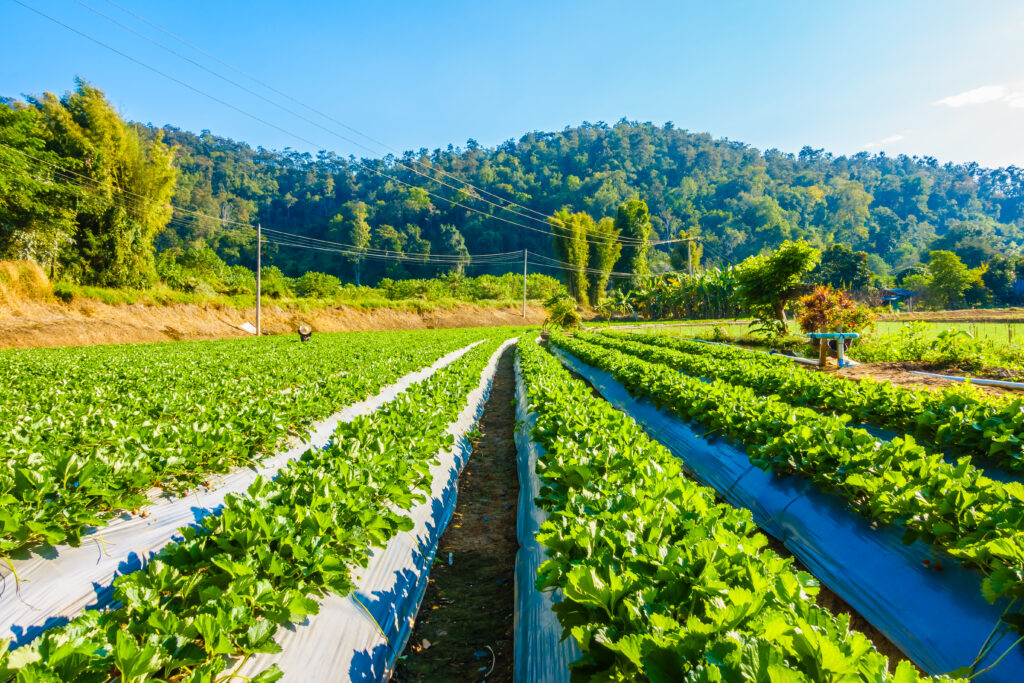

One thing we all can agree upon is how agriculture has changed a lot in the last few decades. Farmers and farmland owners are no longer thinking only about “growing one crop.” They are actually thinking long-term, as in soil health, smart resource use, low farming costs, security against unpredictable weather, and overall sustainability. And somewhere in the middle of all this, one approach keeps standing out repeatedly: mixed farming.
Mixed farming is not a new concept. In fact, it has been practiced naturally in many parts of the world for generations now. But today, it’s getting its hype back with new importance. As farmland becomes more valuable and farming becomes even more sensitive to climate and cost, people want farming systems that are sustainable, practical, and profitable.
This is where mixed farming really shines, and the beauty of it? Well, anyone, even you, can practice it with proper planning. Before we dive into mixed farming advantages and all that you need to know, let’s start from the very beginning and understand what’s what!
What Is Mixed Farming in Agriculture?
If we put it simply, then mixed farming means growing crops and raising livestock on the same farm. Or even growing multiple complementary crops together right there on the same land. So instead of depending on only one output (like only rice or only wheat), a mixed farming system creates multiple outputs from the same farm.
So this is a straightforward answer to what mixed farming is in agriculture. But why does it matter? Well, it matters because farming becomes stronger when things support each other.
For example:
- Crop residues can become fodder for livestock
- Livestock manure can go back to the soil as a natural fertilizer
- Legume crops add nitrogen to the soil and help other crops grow better
- Fruit trees offer shade and reduce soil erosion, while vegetables grow in the same area
So, for real, your farm can literally turn into nature. That is the essence of mixed farming in agriculture, and it is also what makes it such a sustainable and smart option for modern farmland owners.
Benefits of Mixed Farming
Now that you know what is mixed farming in agriculture, let’s get to the core, and understand the benefits of mixed farming and why so many farm owners and experts at SBC Earthfulness are going back to it:
| Area of Impact | How mixed farming helps | Outcome for the farmland owner |
| Soil Fertility | Animal manure recycles into soil, + crops rotate | Healthier soil, long-term land value improves |
| Cost of Farming | Natural manure & crop residue reduce external inputs | Lower dependence on chemical fertilizers and feed |
| Profit Stability | Earnings from both crops + livestock | Income is protected even if one product fails |
| Climate & Weather | Different plants + livestock spread risk | Farm stays productive despite seasonal challenges |
| Resource Utilisation | Nothing goes to waste | Higher returns per acre |
| Food & Lifestyle | Multiple food products from the same land | Vegetables, fruits, milk, eggs, fodder, everything at home |
Let’s go deeper into the advantages of mixed farming in agriculture in a very simple flow:
-
Higher Income Security
Depending on one crop is always very risky. It is because, let’s say, the price drops or the crop fails. This means the loss will be huge, and you will have nothing else to count on. With mixed farming, that’s never the case. You will have multiple sources like fruits, veggies, grains, milk, eggs, meat, etc. No doubt, this is one of the strongest mixed farming advantages!
-
Soil Stays Naturally Fertile
You might have been taught the opposite, but in reality, animal manure and crop residue are never a waste. They actually work wonderfully as natural fertilizers. Thanks to nature’s design of processes, farmers have to spend less on chemical fertilizers because soil nutrients keep cycling within the farm only!
-
Lower Cost of Farming
Livestock feed comes from the land, and fertilizer comes from livestock. It’s self-explanatory how, once the fam becomes self-sustaining, it adds to the major benefits of mixed farming. Everything you need for anything to grow, you can find right next to you!
-
Reduced Risk from Climate and Weather
Similar to what we were talking about in the very first point, if a drought damages one crop, others may survive. If crops fail, livestock still provides returns. That’s one of the most practical advantages of mixed farming in agriculture today, when weather patterns are unpredictable.
-
Efficient Use of Land and Resources
The best news among all of this is that not a single portion of the farmland goes unused! Even small open areas can be used for poultry, rabbits, or vegetables. Basically, you can now multiply yield per acre without buying more land.
-
Food Security & Self-Reliance
Families or farm communities benefit because the farm produces food, milk, eggs, vegetables, fodder, that too all at home. This is actually why many sustainable living projects promote mixed farming.
By now, it’s very clear why people across the world are tuning to mixed farming advantages!
Also Read : Why Soil Testing is Important Before Buying Agricultural Land
Mixed Farming vs Monoculture: A Side-by-Side Comparison
If you are still weighing your options and wondering whether mixed farming is actually better than sticking to a single crop — a direct comparison usually settles the debate pretty quickly. Here is how these two approaches stack up across the factors that matter most to any farmland owner:
| Factor | Mixed Farming | Monoculture |
|---|---|---|
| Yield Per Acre | Moderate to high across multiple crops; total farm output is consistently higher over time | Very high for a single crop in ideal conditions, but total output drops sharply after a few seasons due to soil depletion |
| Risk Level | Low – if one crop fails due to weather, pests, or price crash, other outputs cushion the loss | High – a single bad season, disease outbreak, or market slump can wipe out the entire year’s income |
| Input Cost | Lower in the long run – animal manure, crop residue, and natural pest control reduce dependence on purchased inputs | High and recurring – fertiliser, pesticide, and irrigation costs tend to rise year after year as soil degrades |
| Soil Health | Improves steadily – nutrient cycling, root diversity, and organic matter replenishment keep the soil alive and productive | Declines over time – continuous single-crop cultivation depletes specific nutrients and reduces microbial biodiversity in the soil |
| Labour Requirement | Higher and more varied – multiple crops and livestock need year-round, diverse labour | Lower and seasonal – labour is concentrated around sowing and harvesting periods only |
| Long-Term Land Value | Grows steadily – healthy soil, biodiversity, and a managed ecosystem make the land more valuable over time | Often stagnates or drops – degraded soil and single-use infrastructure limit future use options |
| Ecological Impact | Positive – supports biodiversity, reduces chemical runoff, and builds a natural ecosystem on-farm | Negative over time – heavy chemical use harms soil organisms, pollinators, and nearby water bodies |
The numbers and outcomes above are not hypothetical — they reflect what researchers, agricultural universities, and thousands of farmers across India have documented over decades. Monoculture wins on short-term simplicity. Mixed farming wins on everything that matters in the long run: income stability, soil health, land value, and sustainability.
What to Consider and How to Manage Them?
Now you know all the benefits of mixed farming, but what you might not know is proper planning. For that, an ideal situation would be to choose SBC Earthfulness for a managed farmland. Anyone can grow a crop and keep a few livestock. But mixed farming is like building an ecosystem where everything on the farm has to support everything else. When done right, the land becomes self-sustaining. When done without planning, things can get messy, expensive, and exhausting.
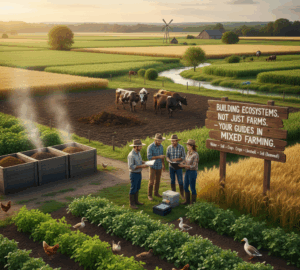
If you choose us, this is all that we would help you with:
- One needs to choose combinations that complement each other, as yes, you need to choose each crop thoughtfully if you plan on mixing them. For example, Legume crops enrich the soil for cereal, and Poultry and ducks help with pest control in farmland ecosystems. This can never be random and must always be strategic.
- Manure is a blessing if managed right. And if it’s not handled properly, nutrients escape, smell becomes an issue, and the ecological balance breaks. So with us, you get proper composing systems, timed nutrients recycling cudgels, and practices that protect your soil.
- Mixed farming doesn’t require the farmer to know everything. Instead, it just requires the right kind of guidance. Our experts are trained where needed, know seasonal planning, and will understand your soil and your big vision better than anyone!
- Lastly, we are not just preparing land for you, but helping you build ecosystems. Mixed farming is not one activity; it is a flow where water supports soil, soil supports crops, crops support livestock, and livestock enriches soil again. Basically, we create a system that doesn’t collapse under pressure!
Final Thoughts
In this article, we discussed all you needed to know about what is mixed farming in agriculture, mixed farming advantages, and how our experts can help you!
At last, we can say that here at SBC Earthfulness, you buy a living ecosystem that is already thoughtfully planned and taken care of. So while you focus on ideating and bringing your big vision to the table, we will help you make it true. If mixed farming is something that excites you, then we look forward to hearing from you!
FAQ’s
1. What is mixed farming in agriculture and how does it work?
Mixed farming in agriculture is a system where crops and livestock are raised together on the same land, creating multiple outputs from a single farm. Instead of depending on one crop, a mixed farming system allows crop residues to feed livestock, livestock manure to fertilize soil, and legume crops to add nitrogen making the entire farm self-sustaining and more productive over time.
2. What are the main benefits of mixed farming compared to monoculture?
The key benefits of mixed farming include higher income security, improved soil fertility, lower cost of farming, and reduced climate risk. Unlike monoculture, which depletes soil nutrients and concentrates financial risk on a single crop, mixed farming spreads risk across multiple outputs fruits, vegetables, grains, milk, and eggs protecting the farmland owner even when one product underperforms.
Q3. How does mixed farming improve soil health?
In a mixed farming system, animal manure and crop residue act as natural fertilizers, continuously recycling nutrients back into the soil reducing dependence on chemical fertilizers and improving long-term soil fertility.
Q4. How is mixed farming different from monoculture?
Unlike monoculture, mixed farming in agriculture spreads risk across multiple crops and livestock. If one crop fails, other outputs cushion the loss — making it more stable for income, soil health, and long-term land value.
Q5. Can mixed farming work for managed farmland investors?
Yes. With proper planning and expert management, managed farmland with mixed farming becomes a self-sustaining ecosystem making it a smart choice for investors looking for sustainable returns and long-term land appreciation.