

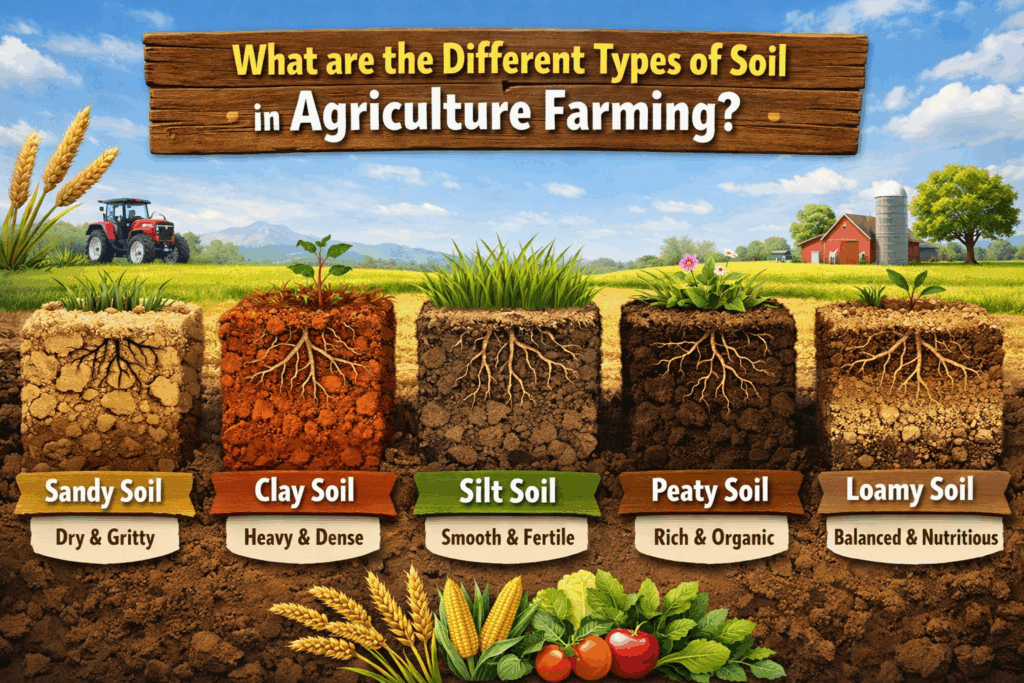

If there is one thing that decides the success of farming even before the first seed touches the ground, it is soil. In agriculture, soil is not just “dirt.” It is the base that nourishes life. Every crop you see, from grains to fruits, from flowers to vegetables, grows only because the soil allows it to. But this is where it gets confusing: different farms, different regions, and even different corners of the same land can have different soil types. And each soil behaves differently.
So, before you buy a farmland, no matter how dreamy it looks, if you want to invest seriously, you have to look at the soil. Especially if you want to lease land for cultivation or start farming. For this, understanding the types of soil in agriculture becomes very important. It helps you decide two things:
- What crops will grow well?
- What improvements or treatments might the soil need?
In this guide, we’ll break down the different types of soil for agriculture, understand their characteristics, and explore which soil is best for farming based on the crop you want to grow. So by the end of this article, you will be able to identify the best soil for agriculture, how to test the soil, and why farmers often focus on balance rather than one single soil type.
Let’s begin!
The Different Types of Soil for Agriculture (and Their Characteristics)
When people ask what the different types of soil are, the simple answer is: soil depends on the proportion of sand, silt, and clay found in it. This exact composition is then what affects drainage, nutrient retention, fertility, and how roots grow.
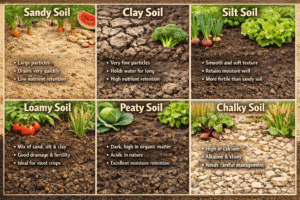
Below are the most common types of soil for agriculture:
1. Sandy Soil
Farming experience with this kind of soil can be a bit tricky. This is because the water slips away fast and pulls the nutrients along with it. However, the good thing is that sandy soil warms up quickly, so it’s perfect for crops that dislike waterlogging, such as carrots, peanuts, watermelon, and coconut.
Its characteristics are:
- Large particles
- Drains very quickly
- Doesn’t hold nutrients for long
2. Clay Soil
This one can feel heavy and compact, and too much water can even suffocate the tops. But if they are managed well by an expert, then because it’s so rich in nutrients, it can support many crops like rice, broccoli, cabbage, wheat, and certain fruit trees.
Its characteristics are:
- Very fine particles
- Holds water for a long time
- High nutrient-holding capacity
3. Silt Soil
Silt soil is a comfortable middle ground, as it responds very well to organic matter. It’s also suitable for crops like tomatoes, onions, garlic, lettuce, and even ornamental flowers.
Its characteristics are:
- Smooth and soft texture
- Holds moisture but doesn’t drain too slowly
- More fertile than sandy soil
4. Loamy Soil
If you ask an expert, they would probably say pain is the best soil for agriculture. The reason is its quality of giving the right balance, as it’s not too dry, not too sticky, and is extremely fertile. This soil supports almost every type of crop if managed well, which don’t worry, we at SBC Earthfulness will for you!
Its characteristics are:
- Mix of sand, sit, and clay.
- Excelling drainage + nutrient retention
- Ideal texture for roots.
5. Peaty Soil
This soil can be very fertile, which is great, but sometimes it needs pH balancing. Our team of experts will take care of that, so you can use this soil for crops like sugar beet, cabbage, carrots, and leafy vegetables.
Its characteristics are:
- Dark color, high organic content
- Often acidic
- Great moisture retention
6. Chalky Soil
Last but not least, Chalky soil is not naturally the best soil for agriculture. The only way to work around it is with regular composting, mineral adjustments, which, well, can be hectic if you are not a seasoned farmer. But with the help of our experts, chalky soil can support crops like barley, spinach, beets, and cabbage.
Its characteristics are:
- High calcium content
- Alkaline in nature
- May need nutrient correction
Which Soil Is Suitable for Agriculture: Matching Crops to Soil Types
Understanding what is the best soil for farming depends on matching crops with the right soil conditions.
| Soil Type | Water Retention | Nutrient Retention | Root Retention | Best Suitable Crops |
| Sandy | Low | Low | Easy | Groundnuts, Watermelon, Carrots |
| Clay | High | High | Hard | Rice, Broccoli, Wheat |
| Silt | Medium | Medium-high | Easy | Almost all vegetables & cereals |
| Loamy | Balanced | Balanced | Perfect | Almost all vegetables & cereals |
| Peaty | High | Medium | Medium | Cabbage, Carrots, Beets |
| Chalky | Low-medium | Medium | Medium | Barley, Spinach, Beets |
How to Identify and Test Which Soil You Have?
Still sounds complicated? Well, you do not need a lab every time to understand your soil. Here are a few simple checks you can do to identify:
| Test Type | What You Do | What It Tells |
| Texture Test | Rub oil between your fingers | Sandy feels gritty, clay feels sticky, silt feels smooth |
| Roll Test | Try rolling soil into a ribbon | Long ribbon = more clay. No ribbon = sandy |
| Jar Test | Shake soil + water in a transparent jar | Layers settle, showing % of sand, silt, clay |
| Drainage Test | Pour water into a soil pit | Fast drainage = sandy, slow = clay, balanced = loamy |
For serious farming or land investment, a professional soil test is always recommended. It shows:
- pH
- NPK levels
- Organic matter
- Micronutrients
This helps decide fertilizer needs and crop compatibility. Once you understand these things, you are literally a pro!
Why “Best Soil for Agriculture” Is Often a Balanced Mix
When people search for the best soil for agriculture, they assume there is this one magical soil that solves everything. But, well, only if farming worked that way!
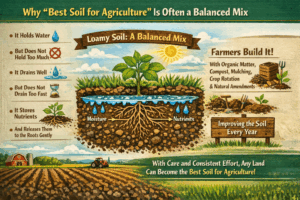
The reason why loamy soil is considered the best soil for agriculture is not that it is always naturally great, but because:
- It holds water
- But does not gold do too much
- It drains well
- But does not drain too fast
- It stores nutrients
- And releases them to the roots gently
In simple words, it’s a balanced soil that has the best of all soil worlds. And here is a truth: farmers don’t find loamy soil. They built it. They do it with organic matter, mulching, compost, crop rotation, and natural amendments; farmers make their soil better every year.
So basically, even if a land doesn’t start with loamy soil, consistent care can turn it into the best soil for agriculture over time.
Final Thoughts
When someone tries to understand what are the different types of soil, the goal is never just to identify soil. The real intention behind it is to grow crops successfully right on their farm. And like we said, soil is not magic, and there is no magical potion to give your roots and crops the best nutrition. In fact, every soul type has its own strengths and weaknesses. The secret of profitable farming lies in:
- Choosing the right crop
- Testing the soil regularly
- Improving soil structure year after year
So, instead of chasing the “perfect land,” you should keep your focus on soil knowledge + soil management. That is the mindset that will help you build a sustainable and productive farm that performs and serves you for decades.
Frequently Asked Questions
Q1. Which soil type is considered the most fertile in India?
Alluvial soil is generally regarded as the most fertile due to its balanced texture and high nutrient content, making it suitable for a wide range of crops.
Q2. Why is black soil ideal for cotton cultivation?
Black soil has high moisture retention and is rich in minerals like calcium and magnesium, which support cotton growth even in dry conditions.
Q3. Can crops grow in saline soil?
Yes, but only salt-tolerant crops like barley, cotton, and certain rice varieties perform well unless the soil is treated and reclaimed.
Q4. How often should soil testing be done?
Ideally, soil testing should be done once every 1–2 years to monitor nutrient levels and pH balance for better crop planning.
Q5. What is the main challenge with laterite soil?
Laterite soil is low in fertility due to leaching of nutrients, so it requires regular fertilization and organic amendments for productive farming.